These descriptions are a little longer. I got caught up talking about some of my favorite finds.
*
The first public school in the city was built in 1908. This one wasn’t the “endowed” school built several blocks to the east, a grand structure with a central portico and dome, where the children of wealthy white citizens attended. Nor was it “the Negro school,” constructed at the north end of the city, a big red brick box. The “public school” was somewhere in between those two extremes, both in location and style. It was three stories high and almost a perfect square, a solid and stolid building. The severe silhouette was softened by rows of arched windows, a decorative ridge along the top, and peaked dormers at regular intervals. The cream-and-burgundy color scheme, including inset brickwork delineating each level of the building, gave the massive block some architectural flair. The school was built to impress the poverty-stricken kids who attended here—both as a sense of pride, and as a reminder of what the city had bestowed upon them.

*
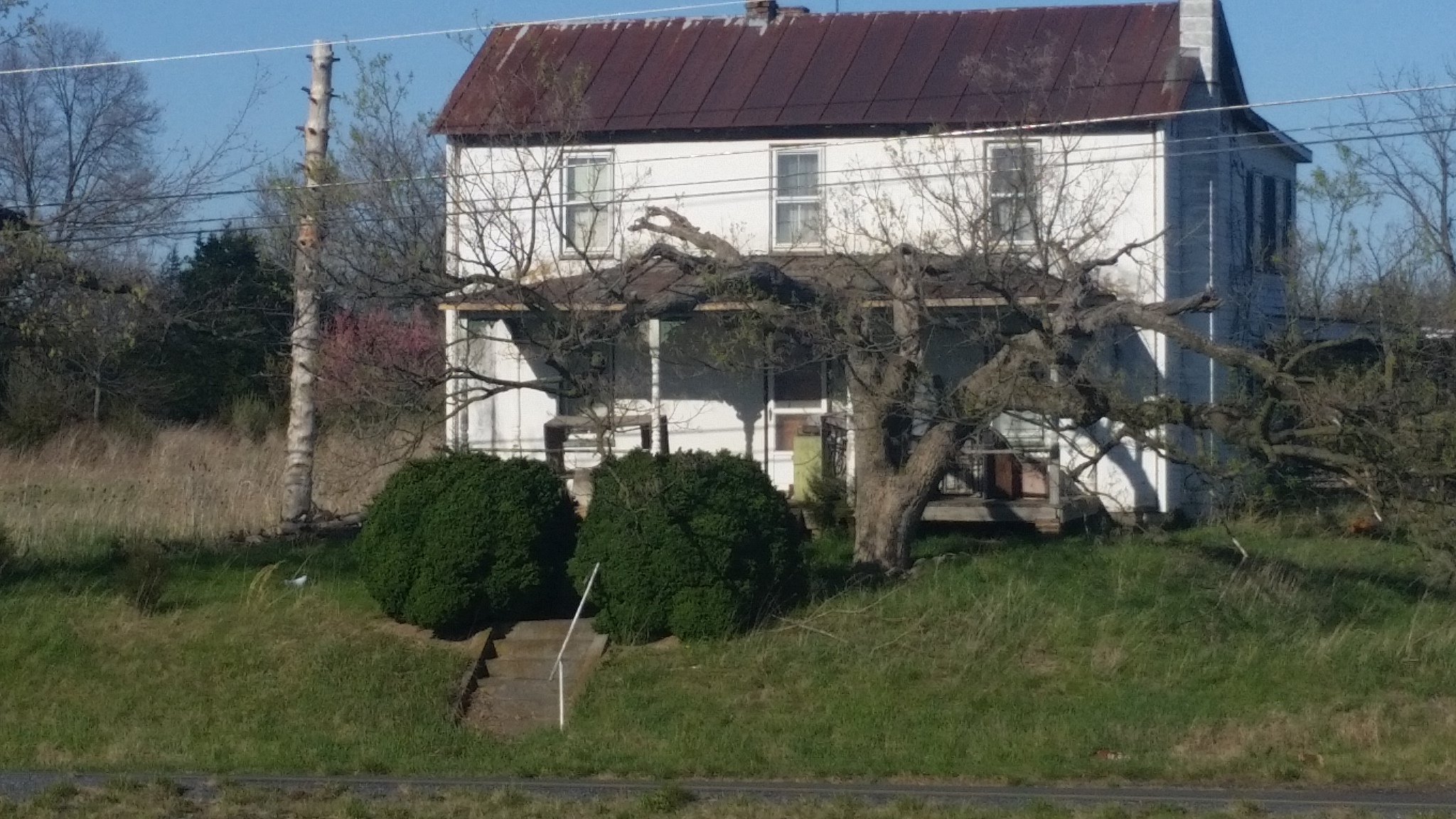
By the time I noticed the house, it had lost all personality. It was the same style as a thousand others built around the same time, a two-story white house with three unadorned windows lined up over an unremarkable front porch. A short, gnarled tree grew in the narrow lawn, stretching cantankerous limbs most of the length of the house. A tall pine stood nearby; almost as if in mockery of the other tree, this one had been sheered of all its branches and was now just a twenty-foot-tall stump.
The homeplace had not always been so bleak. Down the dirt driveway, past a weather-darkened shed, was a small pond and a grassy field that extended to a line of trees. It was easy to imagine a small vegetable garden behind the house, fenced off from the roaming chickens, and girl catching grasshoppers for her cat on a summer day. Like the old pine tree, though, this place had been stripped of its vibrancy. It now just awaited the inevitable end signaled by the large yellow FOR SALE sign posted in its front yard.
*
I’d seen the old house for years, every time I drove to the bank or the grocery store. It was a big house, two stories high and three rooms deep, with an extra wing on one side and outbuildings out back. A single slender chimney was set far back on the peaked tin roof; a fireplace in that position would have trouble heating such a large space, suggesting that the extensions were built once heating didn’t depend on fire.
The house was empty, but still appealing. Its siding was painted white, with light-blue trim around the windows and doors. Instead of a front door centered underneath the double-level porch, this one was set into the corner of the house, flanked by two lights and two empty flowerboxes. White ruffled curtains still hung in the glass panes.
When it was announced that the highway was expanding, I knew that the old house was doomed. I went to see it while it was still standing. I wondered if a farming family had lived here—now vanished along with any trace of farmland. Or perhaps it had been a boarding house with a motley collection of residents. I imagined a boarder coming home on a cold winter evening, shivering her way through the front door, and hurrying up stairs, down hallways, and past bedrooms to find the warmest part of the house.
As I walked along the porch, I noticed something scratched into the concrete. 9-25-53. Someone had loved the place enough to mark a date in stone. Even though I hardly knew the house, and knew nothing of the people who had lived here, I was glad I could tell it goodbye.


*


 Sara Roberts Jones