Speaking of Spiders: Some Marriage Advice

spider-macro-zebra-spider-insect-40795.jpeg

This past weekend, my husband and I got away for an hours-long date. As we were driving home sometime after midnight, I gazed at the stars over the Blue Ridge Mountains. We talked about spiders.

It was wonderful.

We’d driven two hours, eaten Indian together, enjoyed a two-hour show by my favorite indie band (all hail Carbon Leaf), and were on our way back home. We’d discussed his work, my writing, kids, school stuff, plans for holidays, church obligations, an article I read about teaching boys about sexual consent, the 24-disc Eisenhower biography he just finished listening to, the food we ate, the parts of the show we liked, and the boy named Wayne who was generous enough to ask gawky me to slow dance at my last middle school dance.

We still had an hour of driving time to go. So DJ told me about the radio program he’d listened to about some highly-developed spiders. It was interesting—part of the reason I fell in love with DJ was that he knows something about everything—and while he talked, I looked out the window at Orion and thought how happy I was.

If you’re married with little kids, you might be trying to smile and say how great that is that we could get away for all that time. Meanwhile, you’re lucky to get a couple of hours out every three months or so. Assuming the babysitter plans don’t fall through.

Yeah, don’t bother to be nice. Go ahead and bare your teeth. I know the feeling. We had our first child nine months after we got married, and have never lived close enough to family to have any of them pick up babysitting for us. Our dates for years consisted of hiring a teenage girl, eating out, then driving up and down Rt. 11 until after bedtime so we at least didn’t have to put kids to bed. Weekend getaway? Never done it. A week away? Unheard of.

But now I can see something we did right.

During those closed-in years when we had little kids, we could hardly even finish three sentences without interruption. We kept trying anyway. In among kids and work and spiritual meltdowns, we talked about books we read, thoughts we had, opinions we were chewing on. We’d lie in bed at night, sleepy, and talk about theology. While driving up and down Rt. 11, we’d play each other songs we’d discovered, or relate a funny conversation with a distant friend. We didn’t have time for long, leisurely conversations, but we filled what time we had.

And one day, we didn’t have such little kids anymore. This Friday, we left the house at 4 in the afternoon and didn’t get back till 1 in the morning.* We didn’t have to spend any of that time getting reacquainted. The connection we’d shared before life got so intense—that connection was still alive.

So my point isn’t that to keep your love alive, you need to get away without kids, because that’s not really an option for some of us. My point is to fill up the spaces of busy life with conversation, staying connected, never losing sight of each other.

And maybe some night, you’ll be driving together with your love. Maybe you too will gaze out the window as he talks, and see a shooting star trail down the sky. Meanwhile, he’ll tell you about highly-developed spiders.

And you too will be happy.

*Plan assumes you have generous friends who will pick up pizza for your kids’ supper, and neighbors who are always willing to be on call if necessary.
Earning Enough Grace

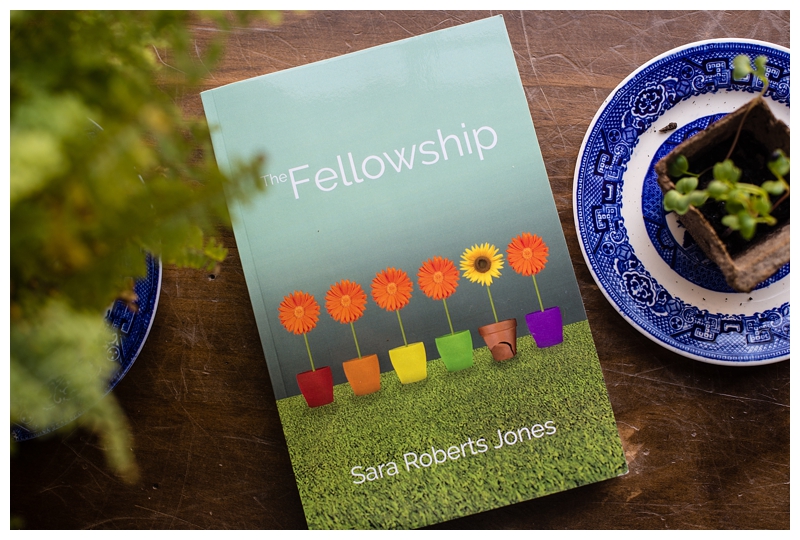
Danielle'sPhotoFellowship.jpg
Photo: Danielle Ayers Jones (DanielleAyersJones.com)

That title is supposed to give you whiplash. You can’t earn grace, much less “enough” of it. If you’re not actually sure what else you do with grace, or if you’re trying to find somebody who understands why this is a big deal to you… may I suggest a novel I wrote?

My ebook will be released soon, but meanwhile, you’re welcome to check out The Fellowship. This interview with my friend Danielle discusses what the book is, why I wrote it, and how I made a heavy subject approachable.

Danielle and I met when I was still in deep in my own Fellowship culture. We lived with three other young women for six months. They challenged my ideas, teased me, dragged me into conversations about topics I didn’t think we were supposed to talk about… and mostly, they plain liked me despite myself. That wasn’t the first time I ever experienced grace like that, but it was the first time I really recognized it.

So it was particularly fun, all these years later, for blogger Danielle to interview author Sara.

Read Part One: Earning Enough Grace

Read Part Two: Earning Enough Grace

And linger to browse Danielle’s blog, where she reads, cooks, thinks, homeschools, and takes beautiful pictures.

New Book FAQ

Well, it’s more like a FAQIAPWAM (Frequently Asked Questions I Assume People Would Ask Me). I haven’t had anybody ask me all these questions, so I made some up.

Q. Why did you choose to write short stories?

A. Because I thought they’d be easier than a novel. (Pause for overwrought laughter.)

Q. Do they involve the same characters as in your novel?

A. No, they feature new characters in new settings.

Q. I loved your novel…

A. Thank you!

Q. … but its subject matter is a little heavy. Do you tackle the same issues in your stories?

A. No, the stories are much lighter. Substantial enough to make a good read, but without the difficult moments in my novel.

Q. What are the stories about?

A. They’re about ordinary people in ordinary life, making decisions that affect the outcome of their day—or their whole lives.

Q. So, not to be offensive, but ordinary people aren’t very exciting.

A. I’m not offended. After all, you’re pretty boring. Haha, just joking! The fact is, ordinary people aren’t boring; we’re all a complex mix of good and bad, wise and foolish. These are sympathetic and funny stories about people you feel like you know.

Q. I’m not convinced. Tell me about some of these ordinary people who aren’t boring.

A. Well, there’s McKee and Cheryl, who take a wrong turn in an unfamiliar town and unknowingly leave a very lasting impression. Or there’s Makayla, whose husband Hunter drives a big expensive truck even though all they can afford to live in is a trailer—plus she’s got a few issues from her first marriage that she hasn’t exactly fixed up. And you’ll want to hang out with Paige Parker—wife, stay-at-home mother of four, superspy, music tycoon, and fantasy wizard warrioress. Other stories involve discovering love in a canoe, Uncle Bobby laid out on the porch, and five pizza recipes.

Q. Hm, you’re right, sounds intriguing.

A. I thought you’d think so. For my longtime “knew-me-back-when” readers, the final story has a distinct Tales from the Creekbank flavor. You’ll like it.

Q. Will it be available in print as well as ebook, like your novel is?

A. As an independent author, I pay for everything. So I’m selling it as an ebook first, and will release it in print when funds allow.

Q. When is the release date?

A. I’m still wrapping up details, so for now it’s “November.”

Q. Will this make a good Christmas gift?

A. Absolutely. Amazon allows you to give an ebook as a gift. If you need a different format, I sell those too.

Q. I bet it would make a good birthday gift, too. Or just a friendship gift. Or maybe an inexpensive splurge on myself!

A. It’s like you’re reading my mind!

Q. So what about the dromedaries who can’t behave? What are the titles of the stories?

A. Oh, come on. You know what I’m going to say.

Q. I have to get the book and see for myself, right?

A. Enjoy! (I really think you will.)

New eBook Release

Confession: my announcement actually has nothing to do with criminal camels. I bet you already knew that.

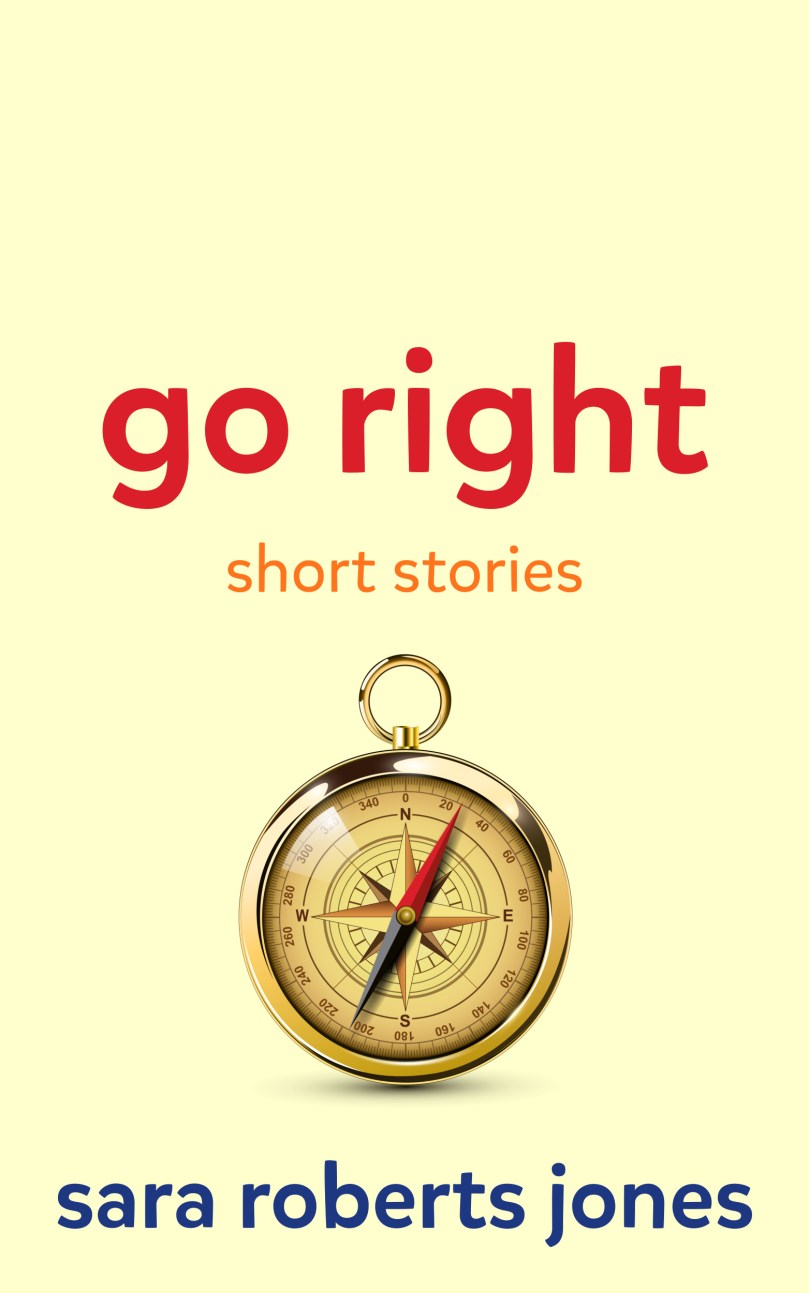
I’m just puzzled dromedaries can’t behave is the mnemonic device I use to remember the titles in my new short story collection.

That’s my real announcement.

I’m launching a new ebook next month.

Six original short stories that will make you laugh, probably won’t make you cry, and will remind you of your own world.

I’ll be posting Frequently Asked Questions to talk more about it. But you’ll definitely want to get a copy, trust me.

Blogging on Patheos Today

I was invited to contribute to a “public square” discussion on Patheos. The question is, “Why do you homeschool?” It’s a really good question for any of us who came through Bill Gothard’s spiritually poisonous system.

Here’s my answer. It’s For the Children

I’m impressed at the lineup of authors that the editors editors pulled in for this topic. It gives a wide variety of homeschool viewpoints. Check it out!

Proving the Red Pen Wrong

I try not to talk shop too much on my author blog. But I love the writing process, and occasionally I break down and indulge myself. If you’re a writer, you’ll understand. If you’re not, well, I’m sure this can apply to your life somehow– if you try hard enough. Isn’t that how we were taught to accept everything our authorities ever said to us?

ball-pen-1186363-1280x960If you’re a writer, you need an editor.

Yes, you’re a good writer. Nobody else can tell your story like you can. Your grasp of grammar is legendary. Writing is your passion.

I know! Me too! Guess what—we still need an editor.

Writers practice a form of telepathy, really. We allow others to see what exists only in our heads. Unfortunately, the connection tends to be glitchy. Some ideas come off half-formed, and there’s usually an unpalatable amount of self-therapy involved. Most people find it hard to grasp exactly what we’re trying to say. It’s the editor’s job to clean all that up.

Now, I really love to whine about being edited. For one thing, it’s expensive. You pay a good editor real money. But more than that, the process is painful. Every darn time. Getting a marked-up document back is demoralizing, embarrassing, and frustrating.

But after the initial shock… it’s also challenging. My life coalesces around a single, burning goal. I’m going to prove my editor wrong.

She thinks this plot point doesn’t work? Yes, it does. I’ll show her it does.

She questions whether a character would say this? Yes, he would. Maybe not quite like that… I’ll make it fit him.

She says this isn’t the word to describe this feeling… um… well, okay, she’s right that time. But only until I clarify the emotional tenor of the scene, and then she’ll be wrong.

I’ve worked with Lee Ann at Illuminations Editing for both my novel (released last year) and my short story collection (to be released this year). It’s been a bumpy ride in spots—okay, fine, I cried a couple of times over my marked-up document— but overall extremely rewarding. Going through my story document this morning, I pulled out a few editorial comments to illustrate what I’m talking about.* This, writer friends, is what you pay an editor to do.

<>
After knowing Curtis for 12 years, I doubt Jordan would actually verbalize a fear of being annoying. After all, this is how she would have always talked around Curtis. Dane made her second-guess herself, but I think it makes more sense to have her self-doubt happen below the surface.

Almost nobody else would pause at a quick exchange of dialogue and think, “Hm, I bet that emotion ought to be internalized instead.” But it does make more sense for that character, and the more consistent I am, the stronger the story is. I took out the spoken dialogue and just left Jordan’s inner voice.

<>
I deleted this exchange because it sounded forced and unnecessary.

The irritating really great thing about a good editor is that she pinpoints areas you already know are weak. I didn’t like that exchange either, but thought it was necessary. It wasn’t.

<>
“Went through” sounds vague. Depending on how you revise this sentence, you may need to remove the paragraph break and/or rewrite the next sentence so that the action connects and builds properly.

One of the rewarding aspects of a working author-editor relationship is how I can be nudged into a little more creativity.

The offending sentence read, “I went through my purse for my phone.” I could just ignore her comment. What reader is going to stop and think, “Went through is so boring. I hate these stories.” But… what if I made my character dump out her purse, and her phone slides underneath the coffee table? More energy, more interest. That’s better, and I always want the story to be better.

<>
This does not sound like a Makayla gesture or Makayla words—or maybe the gesture doesn’t sound right because the words aren’t how she would describe it.

In one particular story, I had trouble staying in voice. I kept barging in and talking like myself instead of like the narrator. Lee Ann never let me get away with it, either. I took out the gesture and reworded the dialogue so that it was no longer me talking.

<>
But just like I don’t ignore my editor’s suggestions, I don’t take all of them either. I’m the ultimate authority over this piece. She highlighted an entire passage with the comment:

This is all unnecessary to the story.

It wasn’t unnecessary. I needed to wrap up a loose end, and I needed to give a character more space after his introduction in the beginning of the story.

The trouble was a telepathic glitch—I’d written it sloppily, so it didn’t ring true for Lee Ann. So I cut down the dialogue and condensed the action. The scene doesn’t drag anymore, but the information remains.

<>
It’s a lot of work to revise a manuscript, maybe harder than writing it to start with. But if the marked-up manuscript is painful, there’s nothing quite like getting it back with, “You fixed everything. I love reading your revisions. It’s like magic.”

I proved her wrong. Life goal achieved.


*Lee Ann approves of “show, don’t tell.” When editing my novel, she had to mention it so often that she finally just shortened the comment to “S,DT” to save us both time.

Inviting In the Blacks

love-1-1314956-1280x1920Up until two or three years ago, I thought racism had pretty much died out.
It was an easy assumption for me. I, a lower-middle-class white girl, grew up in a small Mississippi town only a generation or two removed from segregation. I attended junior high in the “old black school,” and teachers rode us hard to eradicate any use of racial epithets (black or white). The KKK was a thing of the past, and generally deplored among the people I knew. I vaguely knew there had been bad times “back then,” but in my growing up, I heard of only a few incidents that seemed to stem from racial tensions.

I was friendly with several of the black kids, but not close enough that we went to each other’s houses. White girls still didn’t date black boys (I do remember a mild furor when a white friend accepted a black friend’s invitation to a school dance). The churches were divided down pretty straight racial lines; I just always thought it was because blacks worshiped much different than whites did (which actually is true) so we just all preferred our own style.

The more I think about it, the more I realize how separated our world was. The more I see the disdain that my social class held for “them.” But among my parents and other adults, no one taught me malice or hate.

So I took the example of my teachers and parents and went farther. I taught myself to ignore skin color. My kids grew up without hearing anything about how “black people are like that.” Further, I assumed that all the whites of my generation were doing the same thing. We wanted to move beyond the horrors of the past, right?

My first clue that racism was a still big issue should have been when I was writing my novel. When I was sketching out its early drafts, I looked at my cast of characters and realized that they were all white. That’s standard in Christian fiction, and it annoys me. I really wanted to include non-white characters, but immediately ran into a problem.

The Fellowship is a highly insular Southern church founded and run by a white family. This type of church hardly ever includes black families. If I introduced a non-white character, I had to have a good backstory to justify it. But I wanted to avoid the issue of racism because that’s not what my book focuses on.

So I cheated.

I wrote into the story that by the late 80s, black families were admitted into the church and even allowed to marry into the white families. My heroine, Bekah, grew up under these conditions so is basically colorblind. It made me sigh that the only way I could deal with all characters on an equal footing, with only a hint of racism, was to create a utopia that doesn’t actually exist.

I knew it was a stretch. But I didn’t think it was too much of a stretch; we were already well on our way to that point, right? Especially among Christians whose very theology taught us that God looked on the heart, not the outward appearance?

The internet has broadened my circle to take in the black community and what they have to say. The ugly truth filtered in, one heartbreaking bit at a time. It’s easy to “get past” racism when you don’t really live under it.

I’ve changed a lot of my thinking and I’m paying attention to the discussion raging around us. I’m not taking sides except to acknowledge that for generations, whites have enjoyed power and privileges far above their non-white fellow citizens. In a nation founded on principles of equality and freedom, we were wrong. I’m sad for my friends whose skin color eclipses their personhood, and regret how oblivious I was (and am).

But do I regret my decision to make the Fellowship a slightly implausible haven of racial equality? Not at all. Because just like my story gives hope of recovery from spiritual abuse, I like its picture of a world where a person’s skin color is merely another physical trait, not an indication of character.

Here’s to the future.

The Fellowship is available in paperback and Kindle.