I’ve Already Said It

There’s a new Amazon documentary on the Duggar Family called “Shiny Happy People,” which exposes the messed-up theology of Bill Gothard and IBLP. I ought to watch it, but I haven’t. For one thing, I literally wrote a novel about life in a high-control group. For another thing, I haven’t heard Bill’s voice for over twenty years and see no reason to alter that trend. And for a third thing, I dislike doing things just because I “ought” to do them (a natural tendency that turned vaguely pathological after years under Bill’s teachings).

Whatever my opinion of the documentary (I suspect it leans into melodrama, but that’s a completely unfounded accusation), my opinion of IBLP/ATI and other similar groups is easy to find. I’ve filled this blog with my thoughts for the past decade.* Groups like this promise security, train their followers to present a smiling successful facade, and then chew you up and spit you out. The details vary, but the script is always the same. That’s what I have to say.

*I ought to link several posts here, but…. you know…. anyway, search the blog for “bill gothard,” “fear,” “teachings,” or “legalism” to find some of what I’ve already said.

My Weigh or the Highweigh

Back in 2017, I wrote this blog post about the church community begun by Gwen Shamblin Lara. I considered it a handy-dandy tutorial in how to recognize a cult. I’m not the only one who thought so, either: there are, I believe, two documentaries talking about the cult and allegations of abuse that came out of it.

I haven’t watched either one, because I’m less interested in her cult than I was in the way she made a name for herself in the 90s: she designed and taught a Christian weight-loss program. A friend told me about how, at Bill Gothard’s “training center” in Indianapolis, all of the girls in her group—most were teenagers or very young adults—were put on Gwen’s Weigh-Down Diet. “I was nearly anorexic by the time I got out,” she said.

In 2021, I saw the news that Gwen Shamblin Lara, her current husband, and a few other church leaders (including her son-in-law) were killed in a plane crash.

I give all of that background to explain why, when I saw her original Weigh Down Diet+ book in the thrift store, I was curious enough to buy it. I wondered just what thousands of church people—mostly women—were taught about how to lose weight in 1997.

(Note: I often see people give Content Warnings before discussing diets, eating disorders, weight-loss, and other food-related topics. Just in case that’s something you would appreciate, please be aware that these subjects are brought up in a shockingly casual way.)

(Another Note: Every time she mentioned the title of her diet and workshop, she inserted a cross symbol. In order for me to do that, I have to upgrade my WordPress account and activate a plug-in. I’m not doing that. We’ll have to settle for the + symbol.)

On one hand, I’m the target audience for The Weigh Down Diet + I am, after all, a middle-aged woman who carries around extra weight.

On the other hand, I’m not the target audience because I don’t care all that much about food. I like eating, but ultimately what I’m after isn’t the food itself; it’s the comfortable feeling of being full. Food doesn’t have an inherent pull for me. I’d be just as happy if could photosynthesize everything I needed. In this book, Gwen is definitely addressing people for whom food is a major pleasure and pain. Indeed, I’m not sure she realized there were any other kind of people.

But since I’m about thirty pounds “overweight,” that makes me eligible for Gwen’s diet. So I read the book as if it applied to me. It didn’t take me long to come to the conclusion that this woman should never have been giving eating advice to anyone.

She wasn’t unqualified. She was a registered dietician, so she had been educated in food science. But one aspect of her personality came through loud and clear: once she decided on an idea, nothing could shake her from it. She decided at some point that the food-science field had gone badly wrong because they didn’t acknowledge God in any of their studies and recommendations. Since she held that missing key, she felt justified in questioning every conclusion they put forth, and deciding when she was right instead of them. (Which was always.)

But that wasn’t what first stood out to me. What first raised a red flag was how she described her body. She said that extra weight always concentrated around her waist and never to her legs where she really needed it, so she looked like “a potato on sticks.” It made me sad that that’s how she saw herself. Then she moved on to talking about her eating in college, and a whole host of red flags unfurled. She was horrified that she’d put on ten to twenty pounds since her high school days—you know, back before she was a full-grown adult—but at the same time, her university meal card gave her access to food twenty-four hours a day. She could not stop herself from eating all that “wonderful food.”

(Now, I’m speculating here, but I’ve had cafeteria food, even at a university. It’s adequate and sometimes good, but not wonderful. I suspect that she came from a background of deprivation, whether from poverty or otherwise, and it wasn’t so much the amazing food as the unlimited access that she couldn’t handle.)

She tried various diets and “exchanges,” but couldn’t stick to them. She’d often “use up” a week’s worth of points in one weekend. Then came the chillingly casual sentence, “I knew no end to fullness, and I tried throwing up my food after a binge, but I was not coordinated enough.” She admits that despite her light tone, it was a “a very insecure time for me.”

So she sought out nutrition and therapy to deal with her obvious issues… oh wait, haha, no. That’s not what she did. What she did was find a “very skinny” college friend and study how she ate.

This friend—whose only health qualification was that she wasn’t fat—sat down to eat her first meal of the day, around noon. She chose a McDonald’s quarter-pounder and ate about half of it. Then she decided she was full, wrapped up the rest, and threw it away. Gwen was amazed, and resolved that she, too, would be a “thin eater” and would learn to stop eating as soon as she was full.

This was the revelation that finally got her weight under control. She lost those twenty pounds, and they stayed off. She got married and got pregnant three times with very big babies, but always lost the baby weight. She had the secret, and this secret would work for anybody. Anybody. If you are overweight, that means you’re a chronic overeater, and the only solution is to stop eating when you’re full. If you have trouble doing that, God will help you. Stop making excuses. The end.

Of course, it wasn’t the end, because Gwen wrote a whole book and created a whole workshop on this idea. So what, exactly, was the Weigh-Down Diet+? (Never forget to add that little cross!)

To be honest, the basic premise isn’t bad—especially for 1997, when restriction dieting was practically a requirement of womanhood:

  • Eat for hunger, not for emotional comfort
  • Wait until you’re hungry
  • Eat half the portion you’re accustomed to
  • Eat until you are full, then stop
  • Eat anything you want; no eliminated foods, no diet foods (except diet drinks between meals)

The idea is that you separate actual physical hunger from emotional or spiritual needs that you may be interpreting as hunger. As you get to know your body, you can recognize hunger cues and also discern what food your body is really asking for. So you eat to satisfy your body, which means you eat less and lose weight, and you never gain it back again.

I don’t think that’s such a bad outlook. Granted, everybody approaches food differently, so you’d have to take into account allergies, tastes, coping mechanisms, miseducation, etc. But it seems like a good baseline approach. If Gwen had stopped here…

…but she didn’t stop here. The Weigh-Down Diet+ (that cross starts to look kind of weird after a bit) goes astray almost immediately.

The first glaring problem is how Gwen regards thinness. “The motivation to be thin is not vanity,” she explains. “It is natural. God has programmed us to want the best for our bodies.” So if we just let our bodies be our guide, then we’ll naturally lose weight. Because – you’re following this logic, right? – because everyone’s natural ideal God-ordained weight is “thin.” Your body “knows that you are overweight and, therefore, will only ask for small amount of food.” Your body “loves the decrease in volume of food!”

If you’re not thin, it’s because you’re ignoring your body’s design. You overeat, and you need to stop that. Gwen did! She wrote that she got to the point that she found the thought of overeating “repulsive.” And that’s not all she finds repulsive. The terminology she uses when talking about how “we” or “you” overeat is very telling:

  • “Try to stop guzzling from sixty-four ounce thirst busters.” Note that overweight people don’t drink, they “guzzle.”
  • “Before the Weigh Down Workshop+, your stomach did not know if it was going to swallow 10,000 calories, or just swallow a liquid diet drink…” Ten thousand calories? If someone is eating that much, it’s probably due to factors that a mere “workshop” is not going to address properly.
  • “If you are looking for good health, then know that the single most related factor to disease and even early death is overeating.”
  • “Try looking up from the food. Enjoy the company. Have you ever been at a dinner where all you saw was the tops of people’s heads as they had their faces buried in their plates?”
  • “Instead of ripping off the top of the package and then throwing your head back and dumping the M&Ms down the hatch…”
  • “Don’t tell me you haven’t broken in a buffet line or jumped out of the car to get ahead of the next group of people going into the same restaurant.”

She insists that all food is good, but only when physically necessary. The first step of the Weigh-Down Diet+  is that you don’t eat until you feel a real hunger cue. This, she explains, can take anywhere from forty-five minutes to thirty-six hours. If you haven’t felt a hunger cue in three days, she suggests eating a small meal anyway. She also touts the spiritual benefits of fasting (tossing off the casual note that if you have anorexia, you shouldn’t skip meals). She reminds her followers that it’s okay if they feel a hunger cue but can’t eat at that moment; it’ll come back, don’t worry! If you wake up hungry in the night, try praying instead. While she does have special (short) sections for conditions such as diabetes, hypoglycemia, and medication, her overall attitude is that not eating is better than eating. What could possibly go wrong with this idea? Nothing, because less food means more thin!

She absolutely shuts down any suggestion that a person’s weight could be linked to genetics, or that personal trauma might make it difficult to overcome unhealthy eating habits. These ideas merely trap a person into giving up, because what’s the use of fighting against genetics or trauma? No, Gwen clears out all this modern permissiveness with her workshop and book and weird cross symbol, to inform you that it’s just a matter of loving God more than you do food.

That’s the second very big problem with this diet. Gwen proclaims that it will work for absolutely everyone. But a key concept in her method is that the way you learn to resist emotional eating is that you turn to God instead of food. If you feel tempted to eat when you’re not hungry, you should pray. You learn to replace the pleasure and fun you associate with food, by cultivating pleasure and fun in God. Her recommendation for those who suffer from bulimia, for instance, is “Replace the intensive desire to eat with an intensive desire for God, and the bingeing will end. As a result, the bulimia will subside.”

I’m sure that, somewhere along the line, at least one person pointed out that none of this works if you happen to not share her faith. But Gwen decided that it was the right answer, so everybody else is wrong. In Gwen’s world, thin people loved God, and loving God meant you became thin.

There’s no middle ground, by the way. Either you’re a “thin eater” who can stop in the middle of a candy bar if you feel full, or you sneak food and binge until your stomach hurts. Either you’re unselfish with your food and time and love, or you’re a totally self-centered cretin who takes the biggest and best food for yourself and doesn’t care about how anyone around you feels. Either you love God to the point that you have flirty conversations with him, or you worship the refrigerator and don’t care about obeying God.

(She claims in the second half of the book that she discovered this secret of weight loss when she started obeying God. But, um, Gwen? I read the first part of the book. You discovered this secret because you wanted to be skinny.)

The second half of the book actually has very little to do with food, and everything to do with bringing your thinking into alignment with Gwen’s particular brand of 90s Christianity. She’d start out talking about eating, then veer off into how we should accept trials and suffering, including in a marriage with an unloving spouse or a miserable job. She brings up addictions and depression, then she wanders into a rant about how “self-care” is really just an excuse to be selfish, and how women are natural caregivers and will never get tired if they’re doing what they designed to do. Then ZIP we’re back to overeating again! It’s dizzying just to read it. I imagine it was a whirlwind to hear her in person—an intensely cheerful woman with small-framed body, tall blond hair, and utter conviction in everything she said.

She tackled enormous subjects such as dysfunctional families, trauma, addiction, demon possession, and depression. Well, “tackled” is the wrong word. She threw her thin little body into them, bounced off, and then skittered around them by saying that all it took to find freedom was to love God more. For instance, she said that it was illogical that past sexual abuse could manifest as overeating, and it was just “an excuse” for people who didn’t want to give up their love for food—if that gives you any idea of the skill and finesse with which she handled these topics. I skimmed the last couple of chapters because there was no reason for me to read someone talking about things she had no business addressing.

Throughout the book, she cites no sources for any of her claims, but reassures her followers over and over that all this really works. She says, rather confusingly, “How do I know if I am right about this? Just try it for yourself,” and that’s pretty much all the support she offers for her ideas. She talks about how content she is, and her close connection with God, and her happy family. But I’m 46 years old and a weary recipient of many a grandiose promise from smooth-talking speakers with something to sell me. I now keep one thought uppermost: You might be lying.

I also have the benefit of hindsight. I can see how she careened out of the mainstream and created her own church based on being thin and obedient. At least one child died from “discipline” in that church. I also know that she divorced her first husband and remarried. So tell me how all this solves All the Problems?

But she really did claim that. She dazzles the Wei+gh Down+ W+orksho+p devotees with this picture of success:

…You feel more at peace. Someone at work said your face looks different, you are reading your Bible more, and you are communicating with God a lot more. Anger is leaving, and your marriage is better as you are able to love more and think about the needs of others more. You are starting to go through church doors again, and suddenly the preacher has improved his sermons. Even God’s creation looks more beautiful—especially the sunsets.

Gwen Shamblin Lara proclaimed that she was setting her followers free from the tyranny of diets and food. All they had to do was line up for a hefty serving of spiritual guilt and oppression. And really, that’s a pretty small price to pay to be thin.

Gallery of Infamy

Some of the more bonkers quotes from this book.

God did not accidentally leave the Four Food Groups out of the Bible!

*

The stomach is a pouch made out of three layers of muscle, and it is located right below your sternum bone—the bone that is broken open in heart bypass surgery. [Note: this is the only mention of heart bypass surgery in the entire book.]

*

I even rate bites in each category. For example, I searched around in the pork for the juiciest pieces. Since I was approaching full by the time I got to the brownie, I ate the bites that had the most pecans in them. I left some of every food category on my plate, but the juiciest, best morsels were in my stomach. My plate looked like it had been dissected! And what was left was not appealing. Skinny people eat this way. [But most people… don’t.]

*

Skinny people are well aware of their unpopular position in life. [Because people like Gwen hold them up as effortlessly conforming to beauty standards AND Godliness!]

*

Ironically, I know the world tells me that I should be dying from eating beef and putting real cream in my coffee, but I am a-l-i-v-e! In turn, some nutritionally-obsessed people who shop in or operate health-food stores look like they are dying! Why? It seems to me the more we try to monitor our health, the unhealthier we get! … Sensitivity to volume is the dietary habit of most ninety-year-olds. You may know some overweight sixty-year-olds. But how many overweight ninety-year-olds do you know?

*

Death to self, or our will, is the core of obedience: ObeDIEnce.

*

We are not what we eat! God has programmed cows to crave grass—does that mean cows turn into grass? No! They not only remain cows, but they produce more cows and produce calcium-rich milk. … Cardinals are programmed to eat sunflower seeds, but they turn into cardinals. Robins eat worms; mockingbirds eat grasshoppers, and they all live to sing about it.
You Cannot Serve Both

Debt is a sin.

It’s not just a bad financial decision. It is a manifestation of greed and wastefulness, and crushing debt is God’s way of punishing you.

This is the kind of financial advice handed out by Bill Gothard’s organization since the 70s (my own personal “Fellowship”), but it wasn’t unique to him. [Of course it wasn’t. I’m not sure he taught anything actually unique; he just scavenged ideas from other people and repackaged it to look like his own. But I digress.]

This emphasis on debt-is-sin makes sense if you equate “wealth” with “God’s blessing.” If you’re really living up to God’s standards, he’ll make sure you have an abundance of money and you won’t ever have to go into debt for anything.

We heard stories of people who had unexpected windfalls that let them replace their vehicles in cash. About people who refused to go into debt for necessities, and God provided the funds. Even people who saved up enough money to pay for a house without taking out a mortgage. At the same time, we learned that to go into debt meant we put ourselves into slavery, that we weren’t living in enough faith, or that we were simply too greedy and too impatient to wait for God to provide for us.

These teachings have long-reaching consequences. I had a friend whose husband, through the fault of his genetics, piled up a massive medical debt. An already stressful situation was compounded with interest (heh heh) because they both felt that they were being punished since they didn’t have the means to pay off these debts immediately. Never mind that they showed incredible resilience, faith, and loyalty to one another and to God underneath so much pressure. They felt only the judgement of that debt.

And even in my own life, years and years away from this kind of thinking, I realized it still crops up. Recently, DJ and I got a nice chunk of money that we didn’t actually need. His job during the pandemic is relatively secure, and we’re accustomed to living on one income. We agreed that we’d use some of it to pay for termite treatment around the house, but the rest we’d give back to the community.

It was surprisingly hard to write that check. Aside from the pull of greed, I felt wasteful, as if I were “a bad steward” of what God had given us. What if an appliance broke, or even worse, one of our old vehicles died? We’d have to buy a new appliance or pay for the repairs on a credit card. Maybe God let us receive that money in anticipation for this need! But we gave it all away, opening ourselves to the danger of debt.

At this point in my life, I could dismiss this reasoning with a little thought. I mean, these days we carry a good amount of debt as a matter of course. But it was jarring to realize it was there. This kind of thinking turns us into fearful misers who can’t afford to be generous. Instead of fulfilling Jesus’ command to love and help the poor, we find ourselves bound in service to the god of money.

And all those stories I heard as a teenager, of people who lived debt-free? They usually left out some details. It’s easier to live debt-free if you’ve got followers who send you money. Or if, while saving up for years to pay for a house with cash, you and your family lived in near-poverty conditions.

And then there’s the fact that some people just flat-out lied about their circumstances. They didn’t live debt-free, but saying they did sold more books and videos.

American Christianity is fixated on wealth and power, to the point that we assume that someone in dire financial straits must be under God’s judgement. And since we don’t want to be in that situation, we have to hoard our money. We ignore others’ real, present needs in order to guard against our hypothetical future needs.

Debt is a sin is a philosophy that kills the soul for the sake of money. It seems as if Jesus would have warned against this kind of thing.

P.S. Gothard’s organization sold tens of thousands of dollars of curriculum, books, videos, and seminars… and accepted credit cards to pay for them.

Sabbath Restlessness

I occasionally see a meme that thinks it’s solved my church problem for me. It informs me that if I stopped going to church because someone hurt me, then it’s obvious I was focused on people instead of Jesus. In short, if I find church a hard place to be, it’s my own fault.

Do I need to say that I hate that meme? No? Good.

It’s difficult for me to attend church. Even when I don’t fall prey to a panic attack, I find the whole process exhausting. When my choice is to go to a coffee shop and be refreshed, or go to church and be tired… well, the choice kind of makes itself, doesn’t it?

But I try. After all, we’re part of a healthy and safe church now. Nobody reminds me that I have to stay under authority. Nobody is twisting up Scriptures. Nobody watches my kids and judges my parenting. I know it’s a good place.

But it’s hard to feel that.

Recently I attended a service. I even took along colored pens and a journal with faux-reclaimed paper that my daughter got me for my birthday. I listen best when I can doodle, something I no longer apologize for.

Halfway through the sermon, I’d filled up two pages like this:

Untitled design

When I start journalling like that, it means I’m desperately trying to outrun panic. And I didn’t make it this time. I left long before church was done.

When I looked at the pages later, I was struck at how it captures the frenzy of my thoughts in church. Not only am I reliving and grieving past hurts, but I’m also evaluating every word of the sermon to make sure it’s “okay.” My radar, so long suppressed, is on high alert at all times.

No wonder I get tired.

My husband is very understanding, but a lot of people aren’t. A lot of people look at spiritual abuse survivors and criticize them for not getting involved in a church. Well, here you go — handy-dandy photographic evidence of what a service looks like to someone who has been hurt by people in the church. 

I don’t skip church on Sundays because I’m spiritually apathetic. I avoid it because I’m on spiritual hyperdrive. And I long for the day that a church sanctuary is as safe and restful a place for me as a shabby-chic hipster coffee shop.

Fractured for Clarity: “Biblical” Marriage

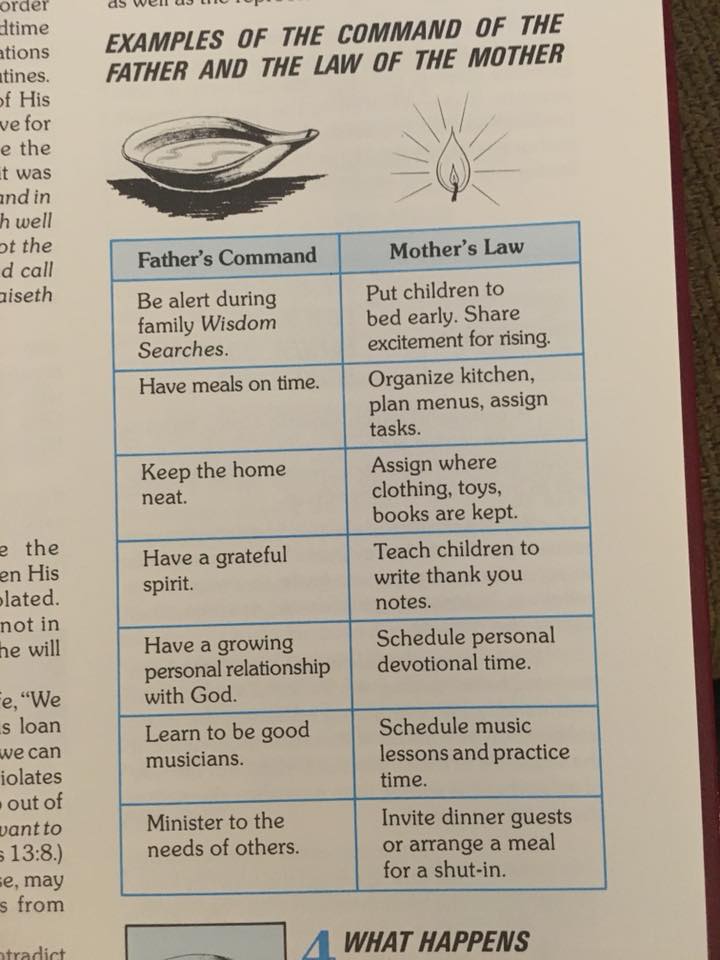
God’s word clearly lays out, with clear clarity, how he designed marriage to look. Here’s one verse in Proverbs that clearly with clarity illustrates this design:

“My son, keep thy father’s commandment, and forsake not the law of thy mother.”

What, you don’t see it clearly? Well, it’s a good thing there are teachers like Bill Gothard and others of his ilk. They know how to “unpack” verses like this.

The chart below — oh my gosh, did teachers of an earlier era love charts — explains how a Godly household operates. This whole idea comes from a long history of male power and female subservience, but especially the Victorian ideal  straight from God via the book of Proverbs. See how the chart uses words straight from the verse? And how it illuminates the hierarchy laid out in the verse? I mean, it’s obviously a hierarchy. Definitely not a parallel. Even though Hebrew poetry was all about parallels. Look, if you’d just read the verse, look at the chart, and compare both to the way men like Gothard wanted the world to operate, then you’ll see that it’s all right there in God’s word.

Command Law Chart

Remember how everything must conform to the principle of authority. Obviously, as the authority of a family, the father is to come up with the “big picture” and the results he wants for his family. (This brand of Christianity is all about getting good results.) The mother, who is more “detail oriented,” accomplishes the will of her husband God well, actually, they’re kind of interchangeable.

Do I have to point out the problems with this model of marriage? Here are a few.

1.In our own marriage (which looks nothing like this chart), DJ once told me that he didn’t know when I was struggling because I got everything done so well. We saw that as a problem. This chart, though, practically prescribes that mindset.

2.Everything in the “Mother’s Law” column is death to my soul. I do a lot of it because I’m the stay-at-home parent, and it has to be done. But organization, scheduling, and management are not my giftings. (You have to make phone calls for some of this stuff!) I’d never apply for a job as an administrative assistant, and I didn’t get married to be one, either.

3.That second column is my husband’s utopia in chart form. He’s done all of these things with our children, including buying a pack of note cards and sitting them down to write thank-you notes. Does that make me a bad wife? Does it — horrors — make him “feminine” because he’s good at details?

4.This chart lays out in easy-reference form an idea that’s very prevalent in homeschooling circles even now. My husband has bucked the system and is as involved in the homeschooling as I am. It’s very hard for him to find other homeschool dads who have more than a passing knowledge or, indeed, interest in their children’s education. Teachings like the one above feed that disconnect.

4.This chart omits a concept that has done wonders for our marriage: If it’s important to you, you are the one who does it. Obviously if it’s important to DJ, then I help out — I’m the one who addressed, stamped, and mailed those thank-you cards. But if something is important enough to you that you want it done, then you take charge of getting it done.

This model is, of course, too artificial to work in real life. No real couple can conform to these columns, because marriage is all about compromise, communication, and shifting responsibilities. But since it’s based on God’s word, then at least a real couple can feel guilty for not living up to the standard.

And by “based on God’s word,” I mean, how teachers like Gothard violently fracture verses so there’s room fit in their own particular philosophy, and then patch it up in a decomposing zombie version of what it originally was.

That sounds a little strong, but I’m not going to apologize. Charts like this (this one being only one of many iterations of God’s Ideal Marriage) made me dread marriage, and did no favors for my early relationship with my husband. Even worse, though, this consistent abuse of Scripture left me with a distaste for the Bible, and especially Proverbs.

And God speaks to misusing his name for your own ends.

Thou shalt not take the name of the Lord thy God in vain; for the Lord will not hold him guiltless that taketh his name in vain. Exodus 20:7

Clearly, with clarity, no fracturing required.

Picking Over the Bones

Tasty meat bone

Discussing a First 5 devotional by Wendy Pope.

I wouldn’t be so bad at Bible studies if they weren’t so irritating.

Granted, I am irritating too. That’s why I’ve steadfastly declined any invitations to Bible studies for the last several years.

But someone shared this “devotional” in a group I’m part of, and in a moment of weakness, I clicked through.

And what do you know — it’s from Irritating Bible Studies for Women, vol. 3!

It’s actually one of a series of devotions called “First 5,” which feature the writings of Lysa Terkeurst and (according to this one) Wendy Pope. I really know nothing about them except reading short posts like this one.

You can click on the link above to see the entire post. I’ll discuss excerpts. Irritably.

Today’s Bible Reading: Job 15
“The “friendly” dialogue between Job and his companions enters round two. Eliphaz is quick to continue his criticism and his retort is quite intense. … Job is suffering; therefore, he must be wicked.

If this is the warm and fuzzy encouragement that comes from a friend, I would hate to meet an enemy of Job’s. But, there is some wisdom sprinkled in.  If we read closely, we can find some ways to help us stay right with God. [emphasis mine]

Okay! Let’s come to a screeching halt right here!

This method of “Bible study” teaches us that we must pull out some kind of personal application from every passage. It ignores the narrative arc of the story, ignores the themes, and even the soaring poetry. It’s a mechanical process that separates ideas from their context, leaving a spiritual nutritional value about equivalent to a pile of picked-over chicken wings.

“Eat the meat and spit out the bones” is glib advice given to those of us who call out bad teachings. It means to reject the bad but keep the good. And you know what? That’s a good way to starve.

Quick recap: The book of Job tells the story of a very righteous man who was devoted to God. “Oh, sure,” says Satan, “that’s because he’s rich, he has children, he’s in good health. Take all that away and see how devoted he is!” So, the story goes, God allows Satan to rip away everything from Job except his life — and even that was miserable because of the boils that broke out all over his body.

As he lay suffering, three of his friends come to sit with him. They all indulge in long-winded monologues that always come to the conclusion that Job must have done something wicked to deserve these calamities, because God rewards good people. Job maintains his innocence, although he does rail against God for the unfairness of everything. In the end, God rebukes the three “comforters” for their faulty understanding of the God of the Universe, and commends Job. Doing “righteous things” doesn’t always mean you actually know who God is.

What this devotional author, Wendy Pope, does is take a bone-filled speech from one of the “comforters” and pick out the little bits of meat. Now, I’m not really arguing with a lot of her points here. Yes it’s good to be wise, to seek God, to listen to the older generations. But to take this story and turn it into a lesson on how to do the right things so we don’t lose God… 

Seeking wisdom from God builds our relationship with Him.

Fearing God keeps our relationship with Him spiritually healthy.

Prayer and a daily commitment to the study of God’s Word are key components to maintaining a right relationship with God.

In the end, our desire is to become more like God, and wisdom from those older than us can be of great benefit.

Hang on, choking on some bones right now.

Starting from a faulty foundation lends itself to bad advice. After all, this “wisdom” comes from someone who doesn’t, in fact, understand Job or God. So Pope has to conclude,

Lord, I want to be a friend who speaks truth in love but I also want to be a friend who receives truth whether it is spoken brashly, rudely or with refinement. My desire is to become more like You no matter what the cost. I long to be completely devoted and always revere You. In Jesus’ name, amen.”

No.

I reserve the right to reject “wisdom” from someone who lacks compassion, or whose intent is to hurt or control. “He’s says good things, even if his way of saying it is abrasive.” That’s not to say that I dismiss everything a person says; but when it comes to seeking out wisdom for my own life, I will find it from people who are safe and who care about lifting burdens, not adding to the ones already on my heart.

My recommendation is to skip the devotional and read Job. Find a pastor or seminarian… or heck, even a poet… who understands structure and story. If all you get is mechanically-processed Bible verses with no sense of their context, you’re left with the idea that you have to do a lot of things — including allowing people to hurt you — because you want to keep God on your side.

Job’s comforters would be thrilled with this a pile of mostly-meatless bones.

And I find that irritating.

A Bride By the Book

You are married now.

You have just taken the name of the most wonderful man in the world and are happier than you have ever thought possible.

You are sure of many things about your marriage. It isn’t going to turn sour and commonplace. The years will be vibrant and alive, exciting adventures of love. Christ is going to have first place in your home. The spiritual roots will be deep and strong. you are going to keep your home what it ought to be by being a sweet, agreeable, efficient wife and homemaker.

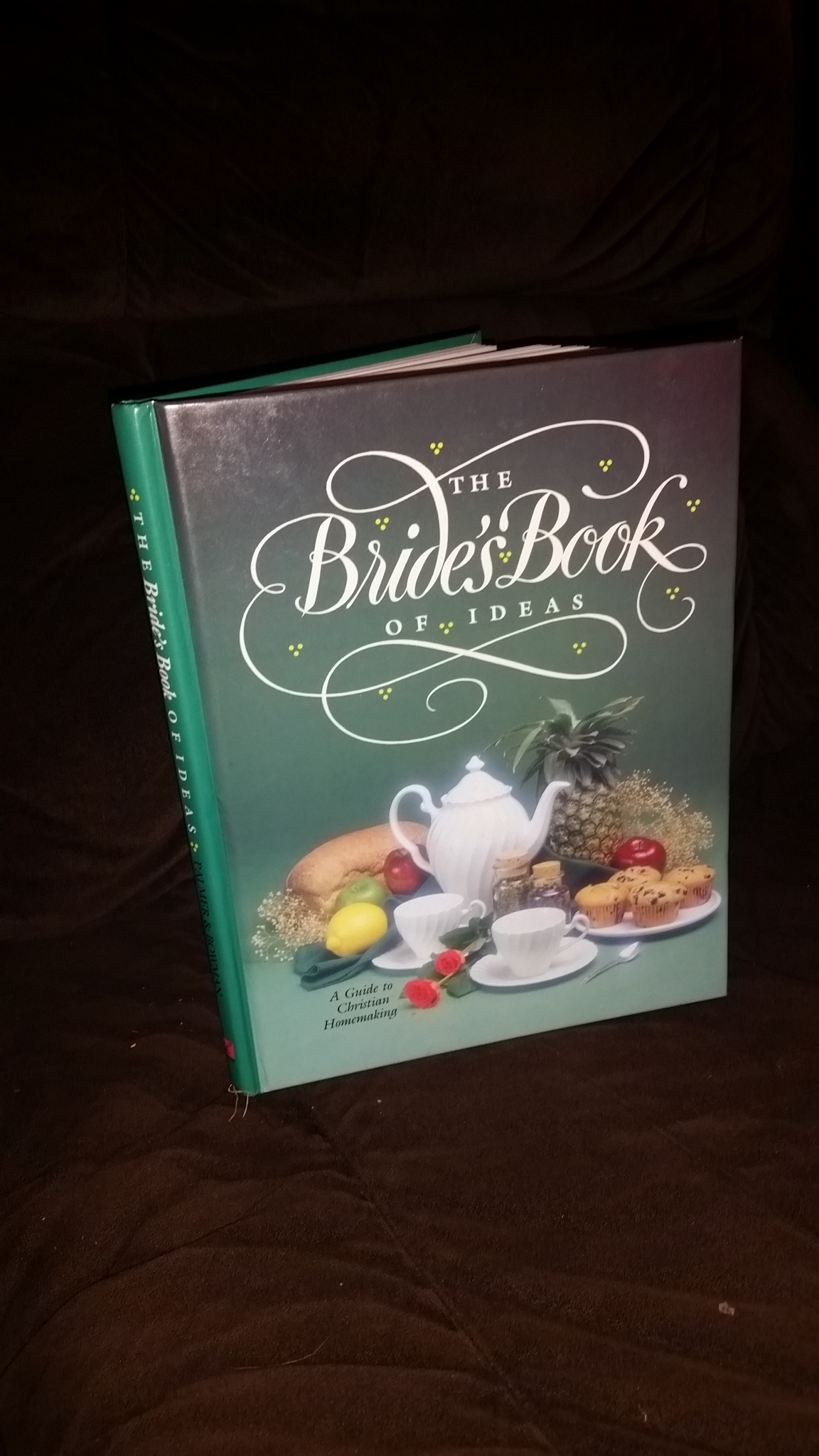
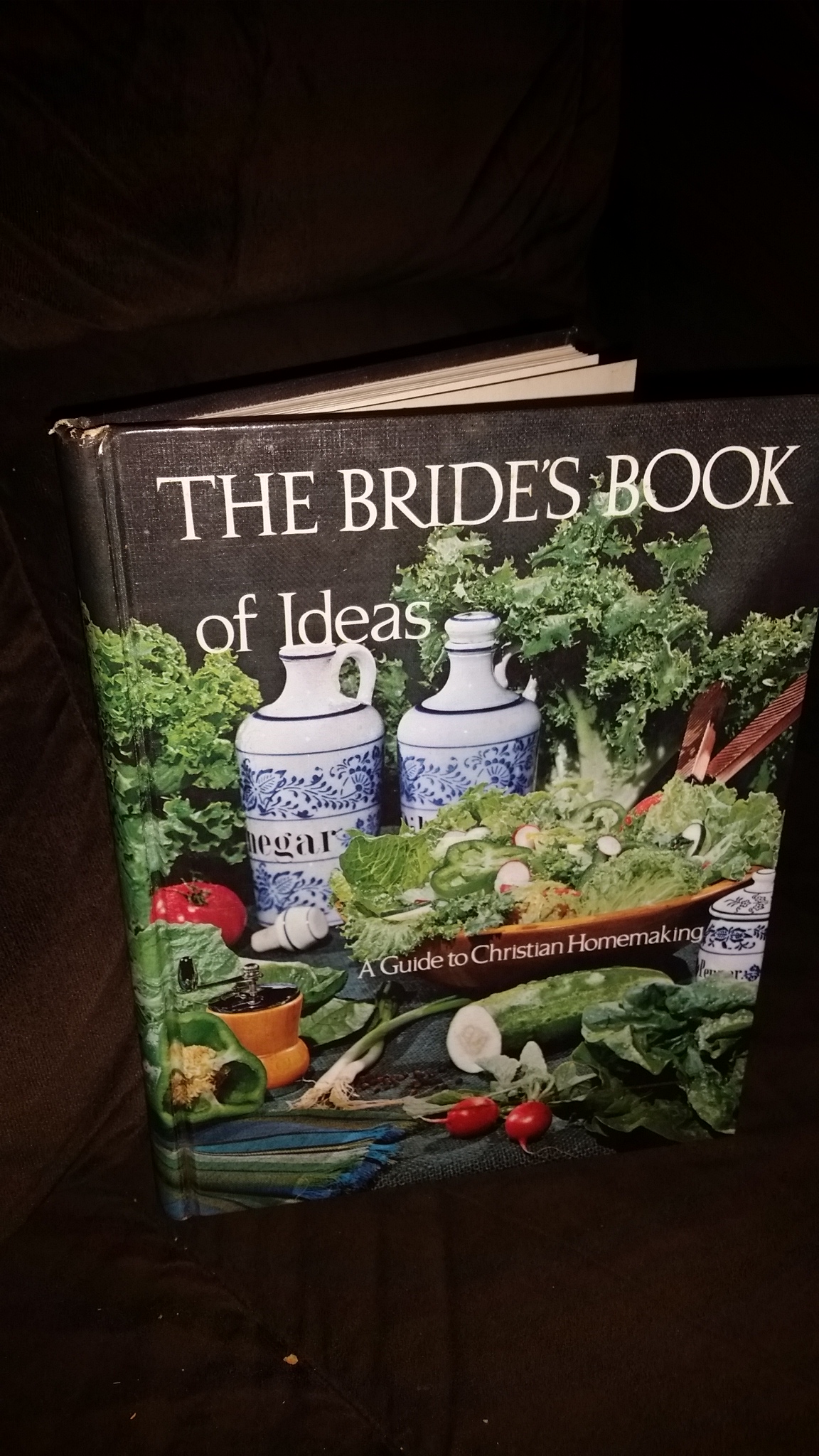
So begins The Bride’s Book of Ideas: A Guide to Christian Homemaking by Marjorie Palmer and Ethel Bowman.

The whole reason I have the book is because of a Facebook photo that makes the rounds occasionally. It purports to be advice to a 1950s housewife, and is incredibly blatant about the fact that the wife’s entire purpose is to make her husband’s life comfortable and stress-free. That was the job of a good wife, definitely; but I wonder if it was ever really stated so baldly. Someone said that the advice was from a Better Homes and Gardens bride’s book, so I went looking for it. Couldn’t find that book, but I did find The Bride’s Book of Ideas and ordered that one instead.

20170814_221126

Then I found out that I’d gotten the 1985 version. I developed a burning need to read the 1970 version — so I got that one, too.

20170814_221153

I was looking forward to comparing the two volumes and soundly mocking all of the advice therein. The updated version has a much-improved layout and design, with a few wording changes here and there; but the substance is the same as the earlier one. The first part contains advice to new brides on such practical matters as choosing insurance, finding a family doctor, first aid, kitchen essentials, how to set a table to entertain guests. The rest of it consists of easy recipes to get a new wife started in the kitchen.

So it’s with some disappointment that I report that, by and large, The Bride’s Book of Ideas is fairly tame and actually kind of useful.

But it is of its time, and I can poke a little fun at that.

(Note: I’ll refer to both volumes as one book unless I’m quoting from a specific edition.)

Marriage Advice
Naturally, the book has some space devoted to motherly wisdom, The Precepts of a Happy Home. Most of the points under this heading are unobjectionable:

Be content with what you have (1970 warns against buying too much on “the installment plan.” 1985 cautions against credit card debt.)

Treat your husband with courtesy and respect and expect the same from him. Despite this even-handed heading, the actual advice is aimed only at the wife, reminding her not to take advantage of her husband’s love by giving way to anger and frustration, and to practice the Golden Rule. Obviously it’s a bride’s book, so it’s talking to her; and I don’t disagree with the advice at all. But this is an example of the kind of wifely advice that persists even today in Christian circles, directed only at the wife with no discussion of her husband’s behavior toward her.

Don’t let disagreements and differences go unresolved. This is probably the area where my husband and I have had to do the most work. We don’t fight, therefore we don’t face conflict, therefore we don’t resolve problems.

(The book concerns itself quite a lot with keeping home like “sweet and harmonious,” which sounds great. But sometimes “harmonious” really means “not facing conflict.” Trust me on this.)

The two points that irked me were ones that I heard as a bride myself, but haven’t found to hold entirely true.

Give the Lord his rightful place in your marriage. “If you want God’s help in making your marriage successful, you must give your lives completely to him.” The authors warn against a new couple being so caught up with each other that they let church attendance become sporadic, and daily Bible reading and prayer turn meaningless and indifferent.

No argument that this can happen to a new couple — but because they’re too in love with each other to let God in? Seriously? What a way to instill insecurity in a new wife, by telling her not to love her husband too much or God won’t bless her marriage.

And, of course — Remember that your husband is the head of the home. The two editions have an interesting little wording change:

1970: Some brides resent a subordinate role and are determined not to allow this antiquated precept to have any place in their lives.

1985: Some brides resent what they view as a subordinate role and are determined not to allow this “antiquated” precept to have any place in their lives.

Note the 1985 version implies that it’s really just the woman’s perception of subordinate role. By the time I was hearing marriage advice as a teen in the 90s, teachers fell all over themselves to explain how it’s not really a subordinate role at all! It’s a blessing! It’s an honor! I kind of prefer the straightforward 1970s version.

Both versions put these upstart brides in their place by adding, “But God charges the husband with the responsibility for making major decisions and being the spiritual leader of the home.” I can see some basis for the “spiritual leader” argument, but where exactly does God state, “And husbands are to make all the major decisions, because I won’t bless a marriage where the wife has an equal say.” Hint: he doesn’t.

So, anyway, if you “practice these precepts,” your marriage “will be happy and will bring honor and glory to God.”

Housecleaning
They cheerfully advise the new wife to do some special cleaning in addition to her regular cleaning — and remind her not to neglect the out-of-the-way areas because she’s building good habits for the rest of her life.

“If you have a job, as so many of today’s brides do…”

Then your husband should pitch in and help? Ha ha! Nope..

“…the [housework] must be condensed into after-work hours.”

My friend Karen pointed out that it’s actually very nice when a couple can split the earning duties and life duties between them. But I thought it was interesting how these authors never stopped to re-evaluate a woman’s responsibilities in the case of an outside job. The house is the woman’s responsibility, the end and amen.

Cooking for Husband
This is a different heading than just “cooking” because the book makes it very clear that a “sweet, agreeable, efficient wife and homemaker” will feed her husband well.

And let me say that in nearly 17 years of marriage, the fact that I feed my husband well has contributed strongly to our happiness.

But this book gives menus not just for suppers… but for breakfast and lunch, too. Like, complete menus that include a beverage and dessert. I laughed out loud when I saw the breakfast menus. DJ and I agree that we don’t think I have ever cooked him breakfast. If he worked close enough to come home for lunch, I’d have something for him — but to be honest, I’m pretty glad I don’t have to worry about it.

The authors acknowledge that in this day and age, the wife might herself work outside the home as well. So they provided the menus so…

… So she and her husband could take turns doing the cooking?

Ha ha! Nope.

… so the good wife can get these meals cooked and on the table. After all, the book admonishes, “You may not be able to prepare a large meal every night, but it is wise to do so as often as possible.”

Wise to do so. They don’t say it, but everybody knows a hungry husband might go astray or something.

Entertaining
I found this section interesting mostly because of the obvious change in social rituals. There’s a discussion of the proper places to seat guests at the table. I’m not sure DJ and I ever worried about where we placed guests. In fact, we’ve always preferred to eat in the living room because it’s more comfortable.

There was also some helpful advice about what to keep on hand “in case of unexpected guests.” I discussed this with DJ, and we agreed that we have no idea why this is a big deal. Did people really just drop in unannounced, stay till suppertime, and expect to be fed? Plus think badly of the housewife who didn’t have enough food on hand to feed them? Judging from the book, this was a real source of anxiety to some women. The authors suggest keeping some staples on hand for quick meals, namely:

Instant mashed potatoes
Small box of dried milk
Tin or two of canned meat, ham, Vienna sausages, or tuna
Can of baked beans
Box or two of fancy crackers
Cake mix
Canned pie filling to top the cake
Can of fruit cocktail (You can leave this in the freezer for weeks; remove both ends of can, slide out fruit, slice thick or thin, put on salad plate, top with a dab of mayonnaise, and NO GUEST WILL EVER WANT TO SHOW UP AT YOUR HOUSE UNEXPECTEDLY AGAIN. Ahem. I added the last part.)

Cooking
Most of the book is devoted to recipes for everyday meals. And it’s very useful in that respect — assuming you crave mid-century Midwestern American food.

Fried chicken, mashed potatoes, grilled cheese, canned tomato soup, fried halibut, buttered frozen peas, orange-cream jello salad, macaroni-tuna salad, hamburgers, ham sandwiches, broiled franks wrapped in bacon, tossed salad, celery and lettuce wedges, baked green bean casserole…

This book is not one of culinary adventuring. The one section devoted to “Foreign Dishes” (1970) or “International Dishes (1985) lists five recipes, one of which is “Italian Spaghetti” and another of which is “Vera’s Chow Mein.”

I can laugh at the food, but this book was written by women who had grown up in the Depression and married sometime around World War II. Good, solid, easy-to-store food was what they prized. My grandmother cooked this way, my mother somewhat, and I still do a little.

Still… a snack of chocolate-covered Wheaties is kind of sad. And I’m not really tempted by “frank boats,” which appear to be hot dogs filled with American cheese and topped with a sauce of pickle relish, “catsup,” Worcestershire sauce, and dry mustard. Is there a more of-its-time recipe than Chicken a la King, a casserole consisting of chopped chicken and cream of mushroom soup?

On the other hand, I’m pretty sure that Marjorie and Ethel would get a real kick out of today’s recipes, like this Cauliflower Spanish Rice:

1 large head of cauliflower
1 tbsp olive oil or avocado oil
1/2 cup diced onion
3 cloves garlic minced
1 tsp cumin
1/2 tsp salt + more to taste
2 tbsp tomato paste
1/4 – 1/2 cup chicken or vegetable broth
Fresh cilantro for garnish optional
1 lime, juiced optional

Yes, 10 ingredients to create a dish that isn’t even actually what the title says it is.

The Bride’s Book of Ideas is dated and, in these days of Googling whatever information we need, obsolete. Still, I’m glad I have both volumes. They take me back to the world of a bride whose priorities were a vibrant spiritual life, a happy husband, a clean house, and friends over for good food. And what do you know — that’s really very  much the same life I want.

“Using [this book] should help make you a gracious hostess and a better, more efficient wife.”

So there you go.

Untwisting Scripture: A book for you

Yield your rights.

Don’t become bitter.

Don’t take up an offense on behalf of someone else.

If these phrases kicked you in the gut… do I have a book for you!

If, however, you nodded along, knowing they are true Biblical principles… well, then, I definitely have a book for you.

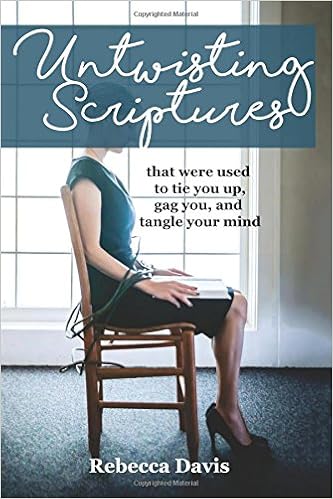
Untwisting Scriptures by Rebecca Davis takes a few “Christian” teachings that have been used to confuse and silence abuse victims for many years, and shows how they’re not even valid Biblical concepts. The book grew out of blog posts that Davis wrote as she learned more about people — mostly women — held captive by abusive theology.

Her tone is quiet and straightforward; she doesn’t indulge in snark or personal attacks. She doesn’t have to. All she has to do contrast actual Biblical context with actual teachings, such as this quote from the once-vaunted Bill Gothard from his 1984 Basic Seminar:

“Just because you are alive, you probably believe you have the right to be accepted as an individual, to express opinions, to earn and spend a living, to control your personal belongings, and to make decisions. You expect others to respect your rights.”

Spoiler: Gothard and the others quoted in this book don’t think you have a valid argument. Also spoiler: many of the people who teach these things either protect abusers, or are abusers themselves. Not a coincidence.

In this small book, Davis untwists a lot of strands. From the difference between human rights and human desires (looking at you, Nancy DeMoss Wolgemuth) to the fact that the Western church doesn’t know how to deal with grief and therefore labels it “sinful,” to the fact that we are supposed to take up the causes of the weak and abused and oppressed—there’s a lot to take in.

(And it’s not her fault that the chart on Page 59 made me want to fling the book away from myself in self-defense. I saw so many charts and graphs in my Bill Gothard days that they just look menacing to me, like the king snake that’s colored like a coral snake.)

Davis made one layout decision, based on early feedback, that vastly improves the reading experience. She set off the false teachings in gray boxes. It’s easy to identify the quotes she’s disproving… or, as she suggests, easy to skip over them entirely if you just don’t want to read the words. Even I, years away from that bondage, still felt the weight as I skimmed those twisty teachings.

I will say that this book targets a specific subculture. Those of us who sat under the teachings of Gothard, Bob Jones University, Nancy (Leigh) DeMoss Wolgemuth, and their ilk will recognize the phrases and terminology. Those outside of this small circle won’t find them as immediately recognizable. But these ideas permeate American evangelicalism. It’s a good bet you’ve encountered the teachings even if you don’t know the names and the terms.

Untwisting Scriptures came out in 2016, not even a year after I released The Fellowship. I mention the timeline because that’s why I didn’t pursue the book when I first encountered it. I was weary after years of struggling through twisted Scriptures. I thought, “So glad somebody is addressing these problems. I’ve already dealt with them. Time to move on.”

When Davis and I connected this summer over our books, I had “moved on” enough to come back to these concepts with renewed passion. So many others are still hurt and grieving. They need to hear a voice that untwists the bonds and gives freedom.

Rebecca Davis’ book is a voice like that. Check it out.

Realistic, Funny, Not Quite Perfect: A Review of “The Fellowship”

Rebecca Davis of Here’s The Joy reviewed The Fellowship. She thought it was engaging from the first page, funny, and realistic. And she found the ending satisfying… “in a way.”

But not entirely.

She definitely has a point. My novel does not explore a renewed relationship with Jesus. I made that a deliberate decision, mostly because I wanted to emphasize the fact that Bekah’s issues with God the Father were not because she wasn’t a “real Christian” who “didn’t know Jesus.” Also, her journey from the end of the last chapter to the beginning of the Epilogue could fill up another novel. I know this — my original Epilogues were longer than some of my chapters.

Still, after reading most of Davis’ blog, I see that missing element more clearly now. If I were writing the book now, I’d still make the same decision; but I’d bring out Bekah’s existing relationship with Jesus much more clearly.

I especially like how, in her review, Davis pairs my novel with a book that Bekah definitely could benefit from. It appeals to my sense of story arc, I guess.

Jump on over and read the whole review. Then stick around and read more of Davis’ excellent blog. She addresses twisted Scripture and how the church tends to protect abusers instead of their victims. My favorite category is “challenging the status quo,” where she takes apart not-actually-Biblical statements like “anger is sinful” and “Christians should yield their rights.”

And she actually wrote exactly the kind of book that Bekah (and the Bekah inside myself) needed when coming out of spiritual bondage: Untwisting Scripture. I’ll be posting my own review soon.

Have you read The Fellowship yet? You really should. It gets you absolutely no extra holiness points with God, but it will help you understand either your own past of spiritual abuse, or why someone you love is struggling. Click the link to get to Amazon, or contact me directly.


Red Flag Corp

red-flag-2-1444642-1280x960Sometimes a cult-like group is subtle and hard to pinpoint. But other times a group is obliging enough wave blazing red flags in choreographed formation. I found one such group recently.

Now, I have absolutely no connection with Weigh Down, Gwen Shamblin, or Remnant Fellowship. I never participated in any of it; I hardly even had heard of it. (Gwen is not pleased with me, I can tell.) A friend pointed me to the site, and I’m just reporting on what I see here. Which appears to be a group that’s practically screaming “Cult!” Or maybe it’s just “Raging narcissist who would like to be a cult leader.” Either way, it’s very instructive.

Let’s take a tour of these red flags, how about?

One person in the spotlight. If you read the site, it sure does have a lot to say about Gwen Shamblin. She seems to really like posting quotes that other men have said about her. Some of the prose is so glowing that you can just imagine Gwen brushing away a tear and saying, “That is so touching. It’s so good of me to say that about me.” Seriously, I bet she’s very nice in person. No, I mean it. People don’t become cult leaders without having very strong personal magnetism.

The Bible like you’ve never heard it before! “It is noteworthy that although the vast majority of the hundreds of thousands of Weigh Down participants had been church-goers for years, not one reported having ever heard these Biblically-based teachings from their home church.” Yeah, it’s noteworthy, all right. The Bible is centuries old and has been studied threadbare. If somebody finds something in it that nobody else has, then you can safely assume you’re hearing more imagination than Godly inspiration.

Promises of Paradise. The site is packed with sweeping claims of how Remnant Fellowship has dramatically broken addictions, saved marriages, and brought families together, all by the “power of God.” In real life, all these areas are an ongoing struggle and don’t always turn out the way we want them to. But a cult promises one-time-and-done miracles to broken and hurting people.

Obedience. The wording can vary, but within the culture of a cult-like group, two pillars support the entire community: authority and obedience. Members must recognize who is in authority, and then obey without question.

“Obedience—obedience—it’s beautiful. Do you want to remain in this love? It’s just like a child who stays by your side and communes with you by obedience and by following what you’re saying.  You have a beautiful relationship, but the one who turns and disobeys does not.  To have a relationship and to have answered prayers is to remain in the vine.  God gives His will to those who are going to obey it.  Why give it to those who are not going to obey it?  It tires you out to tell people or employees or children to do something and you know that they’re just going to stare at you while you speak, but they never do what you say.  Likewise, God gives His will, His beautiful and perfect will and desires, to those who will put it into practice.”

Note that this is cast in terms of obeying God’s will. But where do you learn God’s actual, real will? That would be the person who teaches what “the majority of hundreds of thousands” never heard before.

Blame shifting. Cults never can live up to their promises, but don’t worry, they’ve got that taken care of. When you’ve given them your money and your soul, and “God” doesn’t come through with that miraculous change, they tell you it’s your fault:

“Can you not figure out how to lose weight yet? Then it’s because you’ve not purposed in your heart to do it.  So purpose in your heart to obey what He tells you to do, and then He will show you the way out of your desires that have ensnared you.  Do you really want out of the trap of your own desires? Then obey what He tells you to do. Put it into practice…”

As an entirely subjective red flag, these pictures of doll-like beautiful children with perfectly curled hair put me on edge — particularly as they’re the grandchildren of the great exalted founder. Don’t you want children this sweet and well-behaved? Then get yourself to Remnant Fellowship and prepare to obey.

I consider Remnant Fellowship to be a pretty blatant example of what to avoid. However, anytime you run across a church, a study, or even a pyramid-shaped “business” that promises great results “if you just…”, look for the red flags and consider them seriously. Life is hard, and despite their grand promises to the contrary, cults make it even harder.

Edit: In May of 2021, Gwen Shamblin Lara and several other church leaders died in a plane crash. Her daughter Elizabeth (whose husband also died) has taken over leadership of the church. The website has been extensively updated and revamped since I wrote this post, and interestingly there’s much, much less of Gwen on it now.