
Abigail and the Fool

Minolta DSCI think I’ve complained about some “Christian” marriage advice on this blog before (that’s four links). So the question is, do I ever come across a perspective of marriage that I like?

Funny you should ask that! Because I found a post recently that was an antidote both to the “stay silent and happy” brand of marital life, and redeems the twisted version of Abigail that I was subjected to as a teen and young adult.

Help, I’m Married to a Fool! really isn’t “advice” so much as a reflection on the author’s own married life. She is writing on her twenty-first wedding anniversary, so she and her husband have weathered a lot of years together. She writes that she became a Christian a few years after getting married, and found herself praying often for her marriage.

My husband and I seemed to be at odds on a regular basis, and although I would like to say it was his fault, in truth, we were young, selfish, and trying to adjust to life with many children in a short time frame.

But there was more than just kids and immaturity causing the divide. Something was wrong and she wasn’t sure what; she needed God to fix it! Pray, pray, pray.

Then she noticed the story of Abigail, and a light dawned.

I’ll pause here to remind you about the “complementarian” view of marriage, which is what most evangelicals claim. It’s different from patriarchy in that it considers men and women spiritually equal before God. The term comes from the idea that men and women are “equal but different” — their roles in life “complete” each other. But in marriage, the husband still has the final say in all decisions. The wife is expected to say her piece, then submit to whatever her husband decides. If it’s a bad decision — just like in patriarchy — the wife leaves the result up to God.

In both patriarchy and complementarianism, the story of Abigail is a problem. Her husband, Nabal, scorns and insults the warrior king-to-be, David, thereby inviting very real destruction on his entire household. A servant alerts Abigail, who goes behind Nabal’s back and approaches David with apologies, explaining that her husband is “a fool.” Her offers of peace saved the lives of everyone in the household — except Nabal, who died of a rage-induced stroke when he heard what she did.

The version of Abigail that I learned in patriarchy circles (see my link above) was that Abigail should have gone to her husband first, should have left everything up to God, and was responsible for Nabal’s death. Complementarianism doesn’t go that far, but it’s still uncomfortable with the way Abigail undermined her own husband’s wishes.

But the author of this blog post came to a different conclusion after really paying attention to the story.

In Scripture, fool is often used for a wicked or depraved person; one who acts contrary to sound wisdom in his moral deportment; one who follows his own inclinations, who prefers trifling and temporary pleasures to the service of God and eternal happiness.

That morning I realized that the deepening divide in our marriage was not something I could fix, but that it had to be wisely navigated. My relationship with my husband would not be better until he made the decision to acknowledge God above his own inclinations.

She goes on to explain how Abigail “navigated around” her foolish, dangerous husband. She didn’t passively pray and react and pretend everything was all right; she actively responded, was known as a safe and trustworthy person, and told the truth about her situation.

The post leaves some questions, like — What is a wife supposed to do if her husband is making a fool of himself? Not in a foot-in-mouth sort of way, but in an agonizing “Hey, let me launch into an insulting tirade without regard to my listeners, banking on the fact that they’re polite so I can say whatever I want to.” My first loyalty is to my husband, so I’d be loath to call him out right there in front of everybody. But if it’s a pattern, if he’s ignored my private conversations about it… well, then what? The post doesn’t really offer much guidance.

On the other hand, it gives a freedom that most marriage reflections don’t: it allows the wife to actually think about this situation and decide what her response will be. She can act, and be justified in doing so, without having to worry that she will “dishonor” her husband incur God’s wrath. If she’s reluctant to speak up because of how her husband will treat her at home, in private — well, I would think that’s definitely a signal that it’s time to take serious action, possibly behind his back, to save herself and her household.

But what if she uses this “freedom” to humiliate her husband? What if she cuts him down in public and undermines everything he tries to do for their family? Then guess what? She’s the fool, not him. He can look to the brave, trustworthy, truthful Abigail for guidance in navigating around her destructive habits until God changes her, or until he needs to act without her knowledge to “save the household.”

Marriage relationships are complicated. Sometimes it’s very hard for outsiders to know exactly who is the fool, and who is the Abigail. But trying to solve the problem by telling a wife that she must stay in her “God-given role” and honor her husband at all costs is ineffective at best, and dangerous at worst.

Instead, be smart, decisive, and ready to act on your own and others’ behalf. Don’t be a fool — be like Abigail.

The Bible Bait-and-Switch

lures-537661_1280There’s a certain class of Bible teaching that is mostly about verbs.

Pray this prayer so God will bless you.

Follow these steps so God will protect you.

Hear and obey so God will listen to you.

The teachers in this camp claim to know the hidden ways of God, and they want to teach you to access these exclusive treasures. They usually have some kind of gimmick—a certain prayer, certain steps, a certain way to read your Bible. Then they bait-and-switch ideas to make you think that they’re teaching what God says when it’s really just what they’re selling.

I recently came across someone who sounds a whole lot like a “verbing” teacher. Now, I don’t know anything about Bob Sorge except his titles on Amazon and the Kindle sample of his book Secrets of the Secret Place. So I have no axe to grind or hatchet to bury in his head. I’m bringing him up because all it took was two chapters for me to recognize:

  1. The verb
  2. The gimmick
  3. The bait-and-switch

His verb is to Pray. (He also adds “hear” and “obey” later.) By “pray” he means to sit in quietness and solitude, reading Scripture, and listening for God to speak. Is that bad? No! I think it’s a very good practice to learn to sit in silence—one I’m not good at myself. The Verb is usually a good thing to do, and pray definitely qualifies.

However, he’s got to have a gimmick to sell his special knowledge of God’s hidden ways. Like any good Verbing teacher, he frames it with a Bible verse. I’ve parsed it out below:

Sorge (from his book Secrets of the Secret Place):
“But you, when you pray, go into your room, and when you have shut your door, pray to your Father who is in the secret place; and your Father who sees in secret will reward you openly” (Matthew 6:6).

…When Jesus taught on prayer, He gave primary emphasis to the secret place. In fact, the first thing He taught concerning prayer was the primacy of the secret place. In the verses following, He would teach us how to pray, but first He teaches where to pray.

My comment:
This verse, in context, is actually emphasizing the right attitude of prayer. Jesus is saying that we shouldn’t make a big public display of our prayers to show how holy we are, but to pray privately to God alone, without seeking the admiration of others.

Sorge:
Jesus affirmed this truth twice in the same chapter. He says it the second time in Matthew 6:18, “‘So that you do not appear to men to be fasting, but to your Father who is in the secret place; and your Father who sees in secret will reward you openly.’” Jesus says it twice for emphasis, so we know this word is absolutely certain.

My comment:
The key word here is fasting. Same point as the verse about praying. Don’t make a big holy display of yourself. Carry out your devotion to God quietly, seeking to please only him.

These verses have nothing to do with where your body is, but where your heart is.

Sorge:
Our Father is in the secret place! Furthermore, Jesus gives us the key to finding this secret place. If you’re wondering what you must do to place yourself in the secret place, Jesus made it clear. To get there, all you have to do is shut your door! When you enter your room, and shut your door, you are in the presence of your Father. Instantaneously!

My comment:
Hard to argue with that, but I’m also in his presence in the kitchen, at the mall, or stuck on I-81 in road construction. Finding God by going into a room and shutting a door… that, folks, is Sorge’s Gimmick.

Sorge:
It matters not how you feel. Regardless of your soul’s climate at that moment, you know with absolute confidence you have stepped into the chamber of your Father in heaven. The secret place is your portal to the throne, the place where you taste of heaven itself. Receive this word and you have gained one of the greatest secrets to intimacy with God.

My commentary:
And there you go! If you Verb, by way of his Gimmick, you gain a secret way to God.

They always have Scripture to back up their points, of course. Here’s the Bait-and-Switch where he leads you in with Scripture, and leads you right on out on his own hobbyhorse:

Sorge:
Cornelius was a devout Gentile who committed himself to the secret place of prayer.

My commentary:
The “secret place of prayer” wording is the author’s assertion, not actually taken from the Bible.

Sorge:
[Cornelius’] piety is described in the Book of Acts as fourfold: he gave regularly to the poor; he lived a holy lifestyle; he practiced fasting; and he adhered to the secret place of prayer.

My commentary:
I looked up this verse, Acts 10:2, and this is what it says: “He was a godly man, deeply reverent, as was his entire household. He gave generously to charity and was a man of prayer.”

It doesn’t say a “secret place of prayer.” Although I’m all for paraphrasing to keep things moving, this particular paraphrase is a seemingly innocuous, but very important, addition.

Sorge:
It was because of those four pursuits that God filled Cornelius and his household with the Holy Spirit and made them the firstfruits of all Gentile believers.

My commentary:
That’s the bait…

Sorge:
It’s as though God said, “Cornelius, because of your passionate conviction for the secret place, your life is the kind of example that I can reproduce in the nations.”

My commentary:
… and switch. He’s shifted from Cornelius and his four pursuits to a “passionate conviction for the secret life.”

Sorge:
…By making Cornelius the catalyst for the redemption of the nations, God was giving a powerful endorsement to Cornelius’s priority of cultivating a hidden life with God. The eruption of fruitfulness from his life must have caught even him off guard!

My commentary:
I feel like applauding. “Yay! That was so clever!” He so easily slipped in the idea that Cornelius was blessed by something that the author made up. Not only that, but God endorses it.

And he goes on to base the rest of his book (presumably, from the title) not on anything in the Bible, but on this idea of his about a “secret life with God.” Ideally, his audience doesn’t catch the shift, so they follow along thinking it’s all right there in the Bible. Even if they take the time to look it up, Sorge has taught them to equate “a man of prayer” with “a passionate conviction for the secret place.”

If this is how he justifies the very core of his teaching, then I’m extremely skeptical of what else he has to say. Anything he says about “hearing God’s word” now makes me suspicious, because what he claims is God’s word is actually his own. Anything he says about “obedience to God’s word” is a blazing red flag now, because if he can mold Scripture to fit his own ideas like that, then what does he think we ought to be “obeying”?

Following a teacher like this leads at best to disappointment, and at worst to bondage.

Pay attention to people who promise you a new way to access God. Watch for the Verb, the Gimmick, and the Bait-and-Switch. If you see it, then get up and leave the room. And shut the door behind you.

Earning Enough Grace

Danielle'sPhotoFellowship.jpg
Photo: Danielle Ayers Jones (DanielleAyersJones.com)

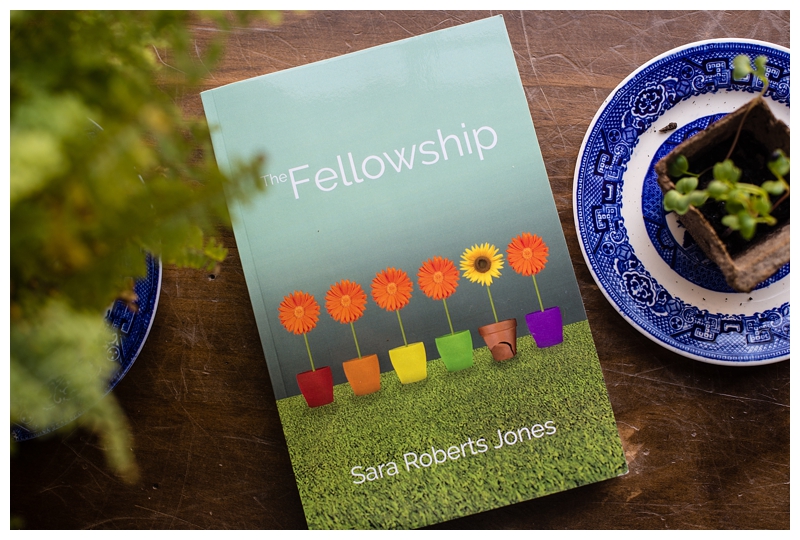
That title is supposed to give you whiplash. You can’t earn grace, much less “enough” of it. If you’re not actually sure what else you do with grace, or if you’re trying to find somebody who understands why this is a big deal to you… may I suggest a novel I wrote?

My ebook will be released soon, but meanwhile, you’re welcome to check out The Fellowship. This interview with my friend Danielle discusses what the book is, why I wrote it, and how I made a heavy subject approachable.

Danielle and I met when I was still in deep in my own Fellowship culture. We lived with three other young women for six months. They challenged my ideas, teased me, dragged me into conversations about topics I didn’t think we were supposed to talk about… and mostly, they plain liked me despite myself. That wasn’t the first time I ever experienced grace like that, but it was the first time I really recognized it.

So it was particularly fun, all these years later, for blogger Danielle to interview author Sara.

Read Part One: Earning Enough Grace

Read Part Two: Earning Enough Grace

And linger to browse Danielle’s blog, where she reads, cooks, thinks, homeschools, and takes beautiful pictures.

Marriage Mind Games

ball-1418250-1279x850A godly wife is submissive. A godly husband is a leader. This is the ideal model of marriage, as laid down by a God who likes making his children play mind games.

It’s not news that I’m no fan of the patriarchal/complementarian view of marriage. I sat through hours of the instruction as a teen. I even tried it when I first got married, with pretty terrible results. It causes more harm than good most of the time. But don’t take my word for it—here’s an article from one of the bastions of submissive womanhood, Above Rubies, with a rundown of how the game goes.

I found the article when someone shared it on my newsfeed, after Above Rubies posted it on their Facebook page. Considering that the working title of my novel was Somewhere Below Rubies, I’m obviously not the target audience. But it’s exactly the kind of stuff I was taught, and obviously still going strong.

You can read the whole thing here. Here on the blog, I’ll provide excerpts. With commentary, naturally.*

The author leaps into motion with the starting gun:

… God spoke to me and said, “Val, you cannot teach this message… Because you don’t understand submission!” Now I don’t mind admitting that I was shocked.

“Lord, do you realize that I’m Val Stares from Above Rubies? I’ve always encouraged submission.” “Yes,” was the reply, “but you still don’t know how to submit.” By now I was on the defensive. “But. Lord, you know that every time I want something, or desire to go somewhere, I always ask my husband first.”

“And what is his reply?”

“He says for me to please myself. Oh yes, he always adds, ‘You usually do.’ I don’t know why he says that because he’s already given me permission to do what I think best.”

Her husband’s reply is an interesting detail. Does he mean it casually, as a lighthearted way to say, “Yes!” or as an unstated resentful way to remind her that she doesn’t really care about his opinion? I’d think that God, who surely has as much basic education as a first-year marriage counselor, would suggest that she ask her husband what he’s really thinking.

But no. The patriarchal God rarely goes in for direct, heart-to-heart talks. That spoils the game.

“If you are serious about learning submission, Val, I want you to go to your husband and tell him that from now on he needs to answer you, “Yes” or “No.” If he says that you can please yourself, then you will take that as his disapproval and will stay home or go without. There is to be no pouting, no banging doors, no attitude of annoyance or hurt when this happens.”

So “God” has laid down the ground rules. Val runs out to the shed where her husband spends a lot of his time, and tells him her new revelation. He laughed—“You’ll never be able to do it!”

About three weeks later, a visiting speaker came to town.
Note the passage of time. Three weeks later.

Finally it was time to ask my husband if I could go. Out to the shed I went, told him what was happening and asked if I could go. As usual, I left everything until the last minute!
That little drop of self-blame is essential to the truly submissive woman’s worldview.

“Please yourself, you usually do.”
That’s how he answered. He didn’t say the magic words. Remember what he was supposed to say? “Yes” or “No.” Anything else meant he didn’t actually approve and she had to stay home. Because God said so.

I raced into the bedroom and pleaded with God, “He’s forgotten he has to say ‘Yes’ or ‘No.’ Can’t I just remind him?” “No” came the answer to my heart…
Because if you did that, it would totally ruin God’s fun.

Around the time I should have left for the meeting, my husband walked in to find me cleaning. “I thought you were going out to a meeting,” he said.
This is a major play right here. She explained how he had really forbidden her from going because he didn’t use the right words. And her husband got mad. He yelled at her that if she wanted to be so stupid and stay home, then fine, stay home!

It was then that the full revelation of what God was teaching me became clear.
I don’t know about you, but I’m revelating all over the place here.

I’m getting the impression that Val is an energetic, take-charge kind of person. Women who run ministries usually are. And she married a low-key, easygoing man. This is a perfectly normal and acceptable personality pairing—except in patriarchal/complementarian circles. In those circles, a take-charge woman has to force herself to be indecisive and subservient, but in order to do so, she’s got to compel her easygoing husband to order her around. However, according to God’s fun little game, she can’t say that.

So Val decided for some reason that her husband’s dismissive “Please yourself, you usually do” wasn’t up to par. She made up a code that he had to follow to show he was really leading her. Meanwhile, her husband thought he’d given her permission to do something she wanted to do, only to discover that she’d denied herself and blamed him. No wonder he was mad.

Oh, hang on. That’s not at all what Val concludes. Instead, she chalks up a major score in the mind game.

I had overridden my husband’s decision so many times that he was now robbed of any desire to lead. He must have felt so cheated. Now, by God’s hand, he was responsible for me staying home, but what hurt me most was the realization that it was me, the Christian wife, who had robbed him!
It’s a homerun, folks!

 My husband is a cautious man and rather slow at making decisions. My impatience at waiting for an answer caused me to make more and more decisions myself and he would go along with me for the sake of peace.
Or maybe he figured out a long time ago that you manipulate the situation to get what you really want, so his actual opinion didn’t really matter.

 I stayed home for several weeks after that, while we both learned our respective roles.
While he learned your official change in the rules, you mean.

So that’s the story part. Now she’s got to get into the doctrine part to justify why they dodge and block instead of talking things out like responsible adults. She quotes some usual verses on submission (Ephesians 5:22, Colossians 3:18) and adds all the usual explanations:

God is not telling husbands to make us obey or make us come under their authority. We do it because we love God and our husbands, and because He has asked us to. It is our choice.
Even though in her own story, she had no choice once “God” told her to do it.

In my mind I saw my broom raised to a horizontal position above my head. The handle was labeled, “My husband’s Authority.” I could see that if he were in his rightful position, I would be able to walk beneath it in an upright position. This upright position was one of honor, security, love–and a surprise I didn’t expect or notice until much later–power!

This is one of their favorite plays. They insist that a woman who doesn’t make any decisions on her own, but lets her husband dictate everything, is in fact very powerful. They point to Esther, who had enormous influence over the king. That’s the kind of influence a truly submissive wife has! All she has to do is go into every situation thinking, as Esther did, “I’ll ask him about this. If I die, I die.” What’s so hard about that?

Just because the things I wanted to do were good things, didn’t necessarily mean they were what my husband wanted to do. He could have other plans.
Not that she asked if he had other plans. Not that he told her he had other plans. They are very careful not to mess up God’s favorite sport.

But God wanted me to measure myself by the attitude of Jesus.

We read about Jesus’ example in 1 Peter 2:18-23, “For what glory is it, if when ye be buffeted for your faults, ye shall take it patiently? But if, when ye do well, and suffer for it, ye take it patiently, this is acceptable with God. For even hereunto were ye called: because Christ also suffered for us, leaving us an example, that ye should follow his steps…Who, when he was reviled, reviled not again; when he suffered, he threatened not; but committed himself to him that judges righteously….Likewise, (with the same spirit of Jesus) ye wives, be in subjection to your own husbands; that, if any obey not the Word, they also may without the word be won by the conversation (the manner of life) of the wives.”

This is actually what 1 Peter 2:18-23 says. It’s written to servants (slaves, as translated in the New International Version).

“18 Servants, be subject to your masters with all fear; not only to the good and gentle, but also to the froward.

19 For this is thankworthy, if a man for conscience toward God endure grief, suffering wrongfully.

20 For what glory is it, if, when ye be buffeted for your faults, ye shall take it patiently? but if, when ye do well, and suffer for it, ye take it patiently, this is acceptable with God.

21 For even hereunto were ye called: because Christ also suffered for us, leaving us an example, that ye should follow his steps:

22 Who did no sin, neither was guile found in his mouth:

23 Who, when he was reviled, reviled not again; when he suffered, he threatened not; but committed himself to him that judgeth righteously:”

It looks a whole lot like she tacked on 1 Peter 3:1, the verse about wives, without saying so. Not only is she quoting Scripture out of context, she just created her very own Frankensteinian context! Slam dunk!

What happened to that feared and dreaded “door mat,” the so-called intimidated mousy wife who gets no say? It was a lie. It had no substance or power. I can now stand up straight, and walk upright, secure and loved under his protection. On this side of submission, I have more say because my opinion is of greater value than before.
In a spectacular leap of logic, she concludes that by not expressing her opinion on anything, it has greater value. Touchdown, baby! GOOOAAALLL!

One word of warning– submission is a daily practice, not a one-time act. I have to daily check my attitude and the humility of my heart.
But it’s even harder to work every day at communicating with each other, balancing each other’s desires with your own needs, taking care of misunderstandings as they happen. No guarantees, no formula to fall back on—just love, effort, and God’s grace.

But in the long run, your marriage grows stronger when you don’t depend on formulas, but take the risk to meet as equals and face issues together.

We serve a God of grace.

Not a God of mind games.

Game, set, match.


*Should I apologize for the unholy mixing of sports references? That would suggest that I’m sorry for it.

A Review: “Gave Me a Deeper Understanding”

Gretchen Louise at Kindred Grace has posted a review of The Fellowship. 

Different people notice different aspects of the story. Some have remarked on how easy it was to get to know the characters. Some recognize specific teachings or experiences. Some love the often-irreverent humor, and a lot of people held out hope that it wasn’t really lost. (What wasn’t? Hm, looks like you should read the story.)

What Gretchen highlights is the fact that “the familiar” is a very strong force. It’s often easier to stay in a bad but familiar situation than risk a new, possibly better, one.

But I think what stood out to me most in The Fellowship is how comfortable the familiar could become. As much as Bekah loved the taste of freedom, the rules that had bound her for so long were so very compelling… At the same time, I was given a much deeper understanding into the mindset of those who are unwilling to leave unhealthy and even dangerous situations.

Read the entire review here, and linger to browse her beautiful site.

Abigail, A Dangerous Woman

The Bible doesn’t pull any punches when it comes to exposing dangerous women. The first one who comes to your mind, just like mine, is Abigail.

Lest you think we’re talking about two different Old Testament characters, I’ll give a rundown of her story. It’s found in 1 Samuel 25.

In the years before David became king of Israel, he was on the run from Saul–the current king–and building up his own following. They happened upon the fields of Nabal during shearing time. David sent ten men to Nabal saying, “Hey, we didn’t mess with your shepherds or steal any of your sheep or goats. So could you give me food for my men?”

It was a big request. But Nabal was a rich man. More to the point, he was still rich thanks to David’s honorable treatment of his property. Also, David’s men had weapons. Like any reasonable man, Nabal saw that it was to his advantage to pay up his part of the bargain.

Oh, wait. Nabal’s name means “fool.” He did not pay up. He insulted David and told him to get lost.

David got mad and began mobilizing his men for wholesale slaughter of every male in Nabal’s household.

(See, class? We sure do need for men to be in charge all the time because it always goes so much better that way.)

Abigail was Nabal’s wife. When a servant came to her in a panic, telling her what was going on, she swung into action. She gathered up food, freshened up, saddled a donkey, and went out to meet David herself. She apologized for her husband’s foolishness and begged him to spare the household.

David, hotheaded though he was, was actually a reasonable man, especially by ancient warlord standards. He agreed to call off the attack. In fact, he was relieved that Abigail had kept him from unnecessary bloodshed.

Abigail went back and told Nabal what she’d done. Nabal was furious. So absolutely, intensely furious that he had a stroke and then died.

So the household was saved, Nabal disposed of, and David took Abigail to be his wife. Which really was the best a woman could hope for in that time.

Okay, so I admit that at first glance, it actually looks like Abigail is the hero of this story. But one of the tricks of a patriarchal worldview is that it can use one or two details to twist the whole perspective into the proper shape.

To start with, you’ve got to keep the most important principle in mind at all time. That principle is: Authority. Every situation, even a story told for centuries around campfires, must be filtered through the grid of Authority.

Who was in authority in this story? Well, David, because he’d been anointed the next king of Israel. Who else had authority here? Nabal, the husband and owner of the property.

Who did not have the authority to make any decisions or take any action? Abigail. Because she was married, she was bound to obey her husband no matter what.

There are two telling details in the passage of Scripture. One, the servant came to Abigail behind Nabal’s back, and even said he was wicked and foolish. Abigail did not rebuke the servant for speaking against their authority. Two, Abigail made her plans and headed out to see David, but as the story notes, She did not tell her husband.

But… but… she spared every  male in the household! Including Nabal’s worthless hindquarters!

Yet you see what her rebellion–yes, she was rebellious–led to. Her husband died. David might feel like God had vindicated him, but Abigail had to live with the knowledge that her actions killed her own husband.

But… but… Abigail became David’s wife…

Pfft. She became one of his wives. Who wants that? (What woman had a choice back then? Hush, you’re cluttering up the narrative.) And she did have at least one son who should have become king after David, but we never hear anything about him. That’s the third devastating detail in this story: God punished Abigail by not letting her son become the next king.

I’m not exaggerating this interpretation. This is what I was taught as a student of Bill Gothard. He embroidered a lot of the details*, but there’s a long tradition among hardcore patriarchalists to demonize Abigail. She usurped her husband’s place and was the cause of his death.

Girls, do not grow up to be like Abigail!

You should instead hope to be like… well… how about you just don’t read ahead in your Bibles until we have time to explain how Ruth, Esther, Deborah, Jael, etc. are also cautionary tales. Here, instead we’ve rewritten history and also these stories with passive obedient heroines. We’ll get back to God’s Word when you’re ready to understand the truths hidden within it.

Good thing you’ve got men to illuminate it for you.

*Gothard claimed that if Abigail hadn’t intervened, then David would have had the guilt of unnecessary bloodshed on his conscience; years later, when he got Bathsheba pregnant, he wouldn’t have sent Uriah into battle to be killed because he’d already know how wrong that was. I didn’t make that up.

** I hope it’s clear that I’m not claiming all Christian men believe this way. But there’s a slice of Christianity that does. If you’ve never encountered teachings like this, you might not realize the enormous effort it takes to re-read the Bible in its own words, not the twisted interpretation we were given.

Orderly Umbrellas

3050_10201307520445888_2703518072495550916_n

“So pastors are under God’s authority,” Bekah explained. “Families are under the pastors.” She held her hand in the air and moved it down levels as she spoke. “Husbands are in authority over wives. Wives are in authority over children.”

When Ty didn’t respond, Bekah added, “It’s all very orderly, anyway.” But of course Ty didn’t give “orderly” as much weight as she did. In the Fellowship, orderliness was nearly one of the Ten Commandments.

The FellowshipChapter 5.

The “umbrella of authority” is a concept that’s been around for many years. I was taught this very “order” as a teenager, although the charts I saw weren’t illustrated with patio umbrellas. It gives it kind of  an easy-living vibe.

It’s a clean, logical graphic that makes its point with a single glance: The Umbrella of Authority concept effectively protects Jesus from getting cooties from women!

Haha, not really. We all know that in Christ, men and women can approach God as equals. So this chart isn’t saying that a woman can’t get to Jesus except through her husband.

Of course, if you look at the husband’s share of life responsibilities, you’ll see that he’s supposed to be the spiritual leader. And underneath the woman’s cute little umbrella, you see “Submit to husband’s authority.” So a woman could approach God on her own, but to be honest, that really does mess up the Natural Order of the Family, doesn’t it? And God is a God of order, so he actually prefers you to go through the proper channels.

So… just go through your husband, okay?

There’s certainly nothing here that a man could object to. Shouldn’t a man lead his family spiritually? Shouldn’t he provide for his family? Shouldn’t he love his wife?  Well, then, what’s the problem?

What do you mean, these responsibilities don’t have to be limited only to husbands?

Oh. Hold on. We need to get something clear here.

You can’t shift these categories around. The umbrellas are impermeable when it comes to proper roles and responsibilities. You let a woman provide for the family or exert spiritual leadership, and the next thing you know, the husband will submit to her authority on some issues, and that’s it. The umbrellas disintegrate in a fiery, bloody, toxic meltdown.

This catastrophe completely incapacitates men. They won’t read their Bibles, won’t hold a job, won’t take out the garbage, nothing.* But they probably will look at porn and run away with another woman (probably some woman who usurped her husband’s authority, destroyed her home, and is now going to destroy yours). Why would you even want to mess with that?

No, this is the Natural Order of the Family. It looks great and worked really well in Victorian times, assuming you happened to be white and middle- to upper-class.

Just go with it.

Just hush.

Just obey.

It’s the Natural Order of the Family.

*Very recently, I read an admonition written by a man to younger women, advising them on how to find good answers to their questions. He explained that they were, first of all, to read their Bibles. Then they were to ask their husbands any questions they had. Don’t worry if you, the wife, knew more about the Bible than your husband did; your questions would motivate him to study! But the flipside is that he won’t read his Bible at all if you bypass his authority and seek out answers on your own.

I heard this same idea very often growing up. Men in patriarchal circles are badly prone to wind down to complete nothingness if their wives aren’t there to motivate, bolster, and reassure them that they are big strong leaders.

**By the way, why doesn’t Jesus have to do anything in this umbrella system?

***Seriously, it’s like its all dependent on our own works or something.


The Patriarchy Shop

The smiling man, dressed in a tailored dark suit, leaned over the polished oak and marble counter. “Welcome to the Christian Patriarchy Market! How can I help you?”

His new customer, a young woman, smiled tentatively back. “Hi. I’m looking for a new one of these, and I was told I had to get it here.”

She laid a large purse on the counter top. It was dark leather with “life” stamped on it in faded yellow letters. “I just turned twenty-two. I feel like I’m ready for a bigger one.”

His smile broadened. “I’ve got exactly what you need!” He opened a cabinet and withdrew another bag. It was much larger, and engraved into its smooth leather surface in flowing silver letters was Life.

“This is ideal for a woman in your situation,” he explained. “See how much bigger it is. You’ve got a lot more space to serve others. There’s a special pocket here to store your heart — I assume you’ve got it locked away in a box and you’ve given the key to your father?”

“Well…” she said hesitantly.

“Because you’re ready for a lot more responsibility, you’ll see that this one has lots of different sections. Here’s where you put your church ministry, here’s where you add your advanced homemaking skills, and don’t forget to fill up this baby pocket with lots and lots of longing! You’d be surprised at how many women in your stage of life don’t give any thought to wanting babies, but you can’t start too soon.”

She examined the bag with interest. “It’s really lovely, but I’m not sure it’s everything I need. I really, really love working in the yard…”

“You can put that with homemaking skills!”

“… and I’m really good at organizing events…”

“Church ministry! But you’ll need to tuck it way down so it doesn’t spill over into all the rest of the bag.”

“And… to be honest, I really want to learn to fly a plane. I’ve kind of looked into being a private pilot.”

The man paused. Then he cleared his throat. “I don’t think there’s really room for something like that. You could get your father to authorize an add-on for missions, but I’ll be honest with you, it’s bulky and doesn’t really fit.”

“But my brother’s accommodates all of that!”

“The men’s line is designed a little differently, of course.”

She fingered the soft leather. “I’d noticed that. Well, anyway, this won’t really work for me, because I’m getting married this summer.”

The clerk’s face lit up with excitement. “Really? Oh, you should have told me that to start with! You don’t need this old thing.” He swept the bag off the counter. Opening another cabinet door, he withdrew a leather bag so large that it took two arms to lift it onto the counter top.

It was made of leather, dyed deep red and purple, and fastened with brass. Surrounded by intricate scrollwork were real gold letters spelling out LIFE.

“This is everything you need!” the clerk exclaimed. “Look at this capacity–you’ll never run out of space for your desires! Lots of room for serving, huge section here for children, just look at your household work space! And right here–almost the entire middle section–is dedicated to your husband. You’ll have a lifetime job just filling this up!”

He looked at her expectantly, but she didn’t seem to share his enthusiasm. “There’s no room here for piloting a plane. Or organizing events. What about knowing God? I was hoping that my new bag would have a lot of space for that.”

“That’s the great thing about the patriarchy design,” the salesman said. “Watch this.”

He walked around to the front of the counter and opened two large double doors on the front. Using both hands, he extracted a rolling leather bag, reinforced with steel and decorated with images of swords. “This is the married man’s bag. It’s extra-double capacity because once a man is married, he’s basically responsible for everything relating to his wife and family. Pretty hefty weight to carry. Aren’t you glad you don’t have to worry about all this?”

“Well, I could help carry it.”

“Oh, no! This isn’t designed for a woman! But let me show you the best feature here.” He opened the man’s bag. Then he picked up the woman’s bag and tucked it inside. “See? It fits right there in the section for ‘spiritual maturity.’ As long as you keep all your things there, you’ll know everything you need to about God.”

She pointed to a small zip pocket on the side of the woman’s leather bag. “What’s that for?”

The salesman’s smile was bright. “You just stuff all your bad feelings in there and zip it up. That’s the feature that makes our design workable.”

The woman stood silently, taking it all in. Then she burst out, “But I don’t want to put all my stuff in there! And that’s way too heavy for my fiance! What happens if I have too much to fit? Or if his bag tears open?”

The clerk was no longer smiling. “I thought you were a serious customer.”

“I am! There’s just some serious flaws in your design.”

“Excuse me. It’s not my design. It’s God’s design. This is the way it works. You can go shopping at some other bag shop, but I warn you, those are badly-made and will rip open at a moment when you’re least expecting it. You’ll lose everything.”

She cleared her throat. “Just curious… have you ever used the woman’s bag to see how it really works?”

The salesman gave a short, derisive laugh. “Well, no. I don’t think God even uses it. He’s male too, you know. So, can I ring you up?”

“I… think I need to think about it.”

“I warn you, if you walk out of here, you walk away from this exclusively-designed line and away from the God who designed it!”

The woman shouldered her small bag again. “I think I saw God in some other places. He really seems too big to fit in here, actually. And so am I.” She turned and walked out of the shop.

A Reading List

So if you happen to be somebody who writes about spiritual abuse and recovery from legalism (just as a random category), you probably have a huge personal library of books on the subject, right?

Well, I guess so. If you’re not me.

I haven’t actually read piles of books on the topic. I seek out actual personal accounts. I also tend to find themes of self-empowerment, grace, and freedom in books that don’t have anything to do with cults.

But there are a few particular books that stayed with me and influenced how I wrote The Fellowship. You might enjoy the same elements I did.

**

The Gift of Sarah Barker, Jane Yolen.
I discovered this book when I was a teenager. I don’t remember many specific details, just that it hit me deeply.

Set in the 1800s, it’s the story of a teenage girl, Sarah, whose mother brought them into a Shaker cult (not to be confused with the Quakers, a completely different sect). This sect taught that sexual love in any form was sinful—they didn’t even allow marriage. (Not surprisingly, the Shakers died out, although Aaron Copeland immortalized their catchy tune “Simple Gifts” in his Appalachian Spring.)

Sarah tries very hard to fit into the sect; but her imagination, her longing for a life beyond, and her attraction to one of the young men keep sabotaging her own efforts.

This book could have been a story of oppression and sexual darkness. But Yolen instead showed many warm moments in the community. It wasn’t all bad; I understood why Sarah doesn’t really want to leave until she has no real choice.

The book seems to be out of print now, which is a shame. It’s worth tracking down.

When Sparrows Fall, Meg Moseley
I don’t like Christian fiction in general. The genre tends to feature flat characters, trite storylines, and pre-packaged answers. Several years ago, I opened Sparrows expecting more of the same.

I was very happily disappointed.

This is the story of Miranda, a young widow with several children whose pastor has decreed that their church is relocating to another state. He pressures her to sell her property, give the money to the church, and move with the rest of the congregation. Miranda has spent her whole married life being a submissive woman, but she digs her heels in and won’t sell.

Then she suffers a bad fall. In the city a few hours away, her brother-in-law, Jack, gets a call saying that he’s been named guardian of the children while she recovers.

Jack shows up to do his duty by his half-brother’s family. He quickly gets drawn into the weird world of Miranda’s church. He challenges the church’s beliefs, goes out of his way to help her and her family (and oversteps the line a couple of memorable times), and eventually finds out the secret that keeps Miranda tied to her house and her life.

I fell in love with Jack, grieved and then cheered with Miranda as she rediscovers herself, and identified with much of the spiritual abuse. I finished the book with new inspiration. If this was Christian fiction, then I could write it. Specifically, I could write that story inside me that just kept eating at me.

The Devil Wears Prada,* by Lauren Weisberger
I happened upon this book, having heard nothing of it, and pretty much inhaled it. At the time, I wasn’t really sure why it drew me in and then stayed with me. I don’t care about the world of high fashion and I didn’t have grand ambitions to work for New York magazines. The main character — although about my age when I read it — lived such a different life from mine it was laughable. (She sleeps with her boyfriend before they’re married? She has her own apartment in the city? She wears pants and sexy clothes without worrying about modesty?)

Years later, I understood its appeal to me. The book shows how a well-meaning person can get trapped in a subculture where everyone obeys an all-powerful leader. And not just trapped, but voluntarily submitting to it–even while hating parts of it. It also showed the fallout among those she loved. Her choices came with a real price.

All that said, I remember this book as a pretty light read with some pretty funny spots.

Ella Enchanted*, Gail Carson Levine
This retelling of Cinderella is one of my all-time favorite books. Ella was “blessed” by a fairy with the gift of “obedience.” She must obey any order given to her. Obviously this presents small problems — anybody can boss her around — and very large problems — anybody can order her to kill, steal, and destroy. She keeps the curse a deep secret. But things get complicated when she befriends and then falls in love with Prince Charmont… and then her malicious stepsister finds out the secret. She has to cut off all contact with Char for his own protection, and then must find a way to break the curse.

This book plays into the cult theme with the idea that Ella must obey, but finds little ways to get around it just to retain her own self. It’s also got some of my favorite lines in it, like, “I’m afraid of heights. And it’s only gotten worse as I’ve gotten taller.”

Girl at the End of the World , Elizabeth Esther
Several years ago, I followed Elizabeth Esther’s blog. I knew she grew up in her grandfather’s cult. Compared to what she went through, my experience was Lite Spiritual Abuse with Low Sodium and No Added MSG.

I also knew she wrote a memoir of her experiences. But I was immersed in writing my own book, and besides, I knew hers would hurt to read.

I should have trusted the blogger I knew back then. Elizabeth writes honestly with a twist of snark that makes it all easier to take in. Her experiences were painful—I am still cringing before Grandma Betty’s ice-blue eyes that demanded complete broken submission about once a week. But Elizabeth also gives moments of beauty, like when she and her husband first connected under a sky of stars. She highlights a few bright, caring people who passed through her life and left a mark of grace on her.

Girl is quick read, except for the frequent necessary pauses to put down the book, dash outside, and breathe in a big gulp of fresh air. As I read it, I was struck by the parallels between her “Assembly” and my “Fellowship”—the fear, the control, the in-jokes, the tight community, and the secrecy.

**

These books helped me understand and process the world I came out of. After all, it doesn’t matter what the outward trappings are; if a system has one person in authority with no accountability, they all operate from a rotten core.

And here’s to recovery that involves good dialogue, a tight story, and no out-of-context Bible verses.


*Movie? What movie? I ignore movie versions of books I like.**

**Except The Help, which was well done. Hunger Games was all right, although I saw only the first one. I liked the first two Narnia movies, hated the third one. Divergent was a disaster. I saw all of the Harry Potter movies, but I won’t sit through them again. I watched all nine hours of The Lord of the Rings twice, and God says I don’t have to watch them again.

Good Things, God Things

My novel opens with:

A virtuous heart keeps an orderly home. 

I made up that quote. But the idea that a good Christian woman will keep a good Christian house is pretty common even out of Fellowship-like circles. Witness this quote from a couple of Elizabeths:

“I love what author Elisabeth Elliot said, ‘A sloppy life speaks of a sloppy faith.’ We’re careful in our faith…careful to tend to our spiritual growth, careful to obey God’s Word, and careful to maintain the spiritual disciplines of prayer, worship, and giving. So why shouldn’t we also be careful of how we manage our homes? That’s not a put-down. Far from it! Creating a safe and comfortable place for your family and yourself is a privilege and significant accomplishment.” –Elizabeth George

Do I enjoy a clean house? Yes. Do I want my home to be safe and comfortable for my family? Yes. Do I consider it a reflection of my spiritual state if I let clutter build up on the table, don’t vacuum the floor, and don’t clean the pencil marks off the wall?

NO.

I’m sorry, Elisabeth Elliot and Elizabeth George, but you’re wrong. You’re taking a societal standard and making it a spiritual requirement.

The standards of society change, but every generation has its own set of “virtue indicators.” These days, it’s more along the lines of eating “clean,” avoiding classist/racist sentiments, and accepting everyone’s choices as a universal good. Nobody actually does this perfectly, but the better show you put on, the more virtue you seem to have.

But just like having a clean house doesn’t get you anywhere closer to God, neither does avoiding processed foods or using the term “First Peoples.”

Good things are good. Do them. God things are God’s. Do those. Sometimes there will be an overlap. But I’m all done letting anyone — revered Christian writer or not — tell me that I have to live up to the standards of modern America in order to please the God of all Eternity.