My Story

Anybody can tell that I had a rough church experience, considering that I wrote a novel about it.

But actually — it wasn’t.

I grew up in a pretty normal Southern Baptist church in south Mississippi. It was conservative, but not particularly strict, legalistic, or reactive.

(But, being good Baptists with an “invitation” at the end of every service, we could sing “Just As I Am” seventeen times in a row without breaking a sweat.)

When I was 14, my parents decided to homeschool my sister and me. As far as the homeschooling went, I liked it. It suited my self-paced, nonconformist personality much better than the public school system.

So: church was okay. Homeschooling was fine. Then where did I get this novel?

Well, in order to homeschool, we got into Bill Gothard’s ATI program (made recently famous by the Duggar family, but we were before their era.) ATI seemed like a good idea at the time. Most cults do.

Over the course of two or three years, my family adopted dramatically different rules about dress, music, food, and romance. Many of the changes were painful for me. With every new publication or seminar or meeting, I knew something else I enjoyed would turn out to be wrong somehow. The “standards” were set high and left nothing up to personal choice.

But I conformed. After all, my other option was God’s punishment.

And my experience with the Institute wasn’t all bad. (Why, no, there’s nothing unsettling about the fact that we considered ourselves as part of “The Institute.”) I made a lot of friends, got to travel some, and was generally treated well — if mostly overlooked — by the leadership. The good was tangled up with the bad to the point that I couldn’t always tell one from the other.

Then I got married, and all those “standards” about dress and romance and music didn’t really seem important anymore. I was glad to leave it all behind.

Well, mostly behind. During the early years of my marriage, I was drawn to stories of cult survivors. Not people who escaped the weird, terrifying cults run by Jim Jones or David Koresh. No, I used my slow dial-up internet connection to find stories of people who left the big, visible, “churchy” cults that looked almost normal on the outside. These people had no real abuse to report, but were emotionally and spiritually devastated. Over five or six years, I read hundreds of heartbroken stories. Some ended in redemption, but all too many didn’t.

Then Facebook dawned and I connected with other ex-Institute students. I recognized those same cult-survivor stories in my very own circle.

And some of them in my very own life.

Gradually I faced my tangled memories. I finally understood how much pain I was in, but had been taught to ignore.

And I was one of the lucky ones. Many of my fellow “Xers” suffered tangible abuse at home, at church, or from Institute leaders. Some survivors were cut off from their families and hadn’t seen their siblings for years. All of us had to deal with a warped view of God, self-hate, and utter confusion over what the truth really is.

For me, redemption came through my marriage to a gentle, faith-filled man; through family and friends who loved me through the tangle; and finally, through a God who broke past the fear and pain and showed me what grace really is.

So my personal story isn’t too horrifying. I’m just someone who got chewed up and spit out by the system, without anything to show for it afterward. Nothing except a tenacious grip on God and a burning desire to give a voice to those who are still too broken to speak.

Launch Day!

martini-glass-1326192

It’s November 13!

Launch Day!

Free-Book-Giveaway Day!

Probably-Get-a-Chocolate-Martini Day!

(I mean, I’ll get the martini. You can get the drink of your choice. We’ll toast each other.)

The Fellowship is officially available in print and Kindle format. Click on over to get your copy.

Already bought one? Leave me a review!

Want to know who won the free-book-giveaway?

I bet you do.

Well, one of you does.

The rest of you can stick around for more chances to win more books and/or other cool stuff. Because, you know, I do cool stuff. Even though I, like Bekah, am actually kind of a dork because I don’t know half of the pop culture references you make.

Anyway, the one person who really, really wants to know the winner of this giveaway is…

Gretchen! (despite the fact that she said my modest swimsuit was “star-spangled spanks”).

(Gretchen, I’ll also tag you on my author page)

I’m pretty happy to be giving a copy to her, actually. Not only is she a local friend, but she and I grew up in the same “Fellowship” culture. We didn’t meet one another until Facebook dawned and hundreds of us were able to compare notes and discover just how warped our shared culture was.

(If you’re curious about exactly what my personal story is, I’ll be posting that in the next few days. Meanwhile, read the novel so you know what I’m talking about. Ha! That was subtle.)

Thanks for hanging around. I love to hear from you, so feel free to comment or email.

Now, if you don’t mind, this published author has a chocolate martini waiting.

*****

Order your copy of The Fellowshipnow available.

Q&A

Cover - FlowersWith the official launch of my novel this Friday, I was glad to (pretend) to sit down to an (imaginary) interview with the good folks at SuperExcellent Book Interviews. SEBI is, of course, a totally fake entity; the link takes you to my Amazon page.

I wrote the interview and answered my own questions.

Seriously? Who even does that?

*glances over both shoulders* Um, me, apparently.

*****

We at SuperExcellent Book Interviews were super excited to have Sara Roberts Jones join us for a little chat about her novel, The Fellowship.

Q: Sara, your book will be released on Kindle this Friday, November 13. I understand it’s already available in print?
A: Yes. Thanks to the Amazon gods whose ways are very mysterious.

Q: Are you planning anything special for this week, in honor of the officially “all the way released” day?
A: Yes! I’ll be drawing names for a free book on Friday. Anyone who won my giveaways or commented on my swimsuit picture is eligible for the drawing. Meaning there’s still time to get your name in, if you click on the link and comment. Go on, it opens in another window so you can go ahead and do it and not even lose your place here.

Q: And is that the end of your fun posts-with-prizes?
A: Funny you should ask that! No, in fact, I’m lining up at least two more giveaways of pretty spectacular items, in time for Christmas shopping. For a glimpse of what they’ll involve, check out Red Pen Travel Notebooks and J.A.’s letter art.

Q: You’ve gotten some feedback from your first readers, with comments like,

“I identified with the main character in ways I can’t express.”

“The protagonists aren’t all good, and the villains aren’t all bad… There’s a surprising amount of humor throughout, subtle and otherwise.”

“I seriously took the morning off work to finish this book.”

“This book changed my life. I don’t even need a Bible anymore. My only regret is that I didn’t meet a brown-eyed country boy earlier in life.”

Q: Wait, are you sure these are all authentic reviews?
A: Well, most of them are.

Q: Although initial reactions to your novel have been favorable, some readers say that the work is triggering and difficult to read. Would you say that’s accurate?
A: Well, sure, it’s story of a young woman who lets herself be manipulated by her “authorities.” She submits to a system that says she’s flawed just because of who she is. It’s also the story of a young woman whose passion to help others and find God ends up inspiring a huge, shattering reaction in her church.

There’s no way to tell that story in a chick-lit pink kind of way. So yes, it’s frustrating and has a few disturbing moments. But a community like the Fellowship isn’t all bad. If you hesitate to get into the story, worried that it’s going to engulf you in despair and ugliness… it won’t. There’s laughter and warmth threaded throughout the story, and vindication in the end.

Q: Why is this novel timely for the Christian community?
A: There have always been, and always will be, authoritarian leaders who use and abuse their followers. But they always look so good on the outside. Many Christians admire these leaders, thinking that what they say is very solid and Biblical. But they just don’t know what really lurks behind that crisp, clean exterior.

The dark underbelly came painfully to light just this year on a national scale with the Duggar family scandals. This family (involved in the same cult I was in) believe in a heavily authoritarian, restrictive lifestyle. Their actions indicate that they believe it’s more important to protect the family name (and fortune) than to speak up for victims. We all know now that Josh Duggar cheated on his wife with random women, but Anna Duggar apparently has no plans to divorce him or leave the family. She can’t — women in systems like these have no real choice. No matter how much they smile.

My novel explores a world like that, sympathetically portraying the people who are trapped in that mindset. I really don’t think it could launch at a more fitting time.

Q: Would you say any scenes are inappropriate?
A: Sure, like entire passages of really sordid theology and injustice. Otherwise, nothing a reasonable adult would find uncomfortable.

Q: Who is your favorite Avenger?
A: Captain America. Hang on, what does that have to do with anything?
Q: Nothing. I just figured you’d enjoy thinking about Captain America.
A: I do, thanks.

Q: Is there anything you’d like to say about your novel before we close?
A: Go buy my book.
Q: Besides that.
A: It launches November 13.
Q: We’ve already said that, too.
A: There’s a shirtless guy on page 319.
Q: Yes, that’s definitely worth mentioning. Well, it’s time to wrap this up. Thank you for joining us and discussing your novel!
A: You’re so welcome. It’s like this whole interview was tailored for me.

*****

Click here to order (print version) or pre-order (Kindle version) of The Fellowship

The Writing Process: A Visual Guide

One of the most baffling responses I can get from a test reader is, “I didn’t really get this part.”

How could she not pick up on what I very clearly spelled out in that scene or story? I read it a thousand times myself. It’s all there! Right… there…? No?

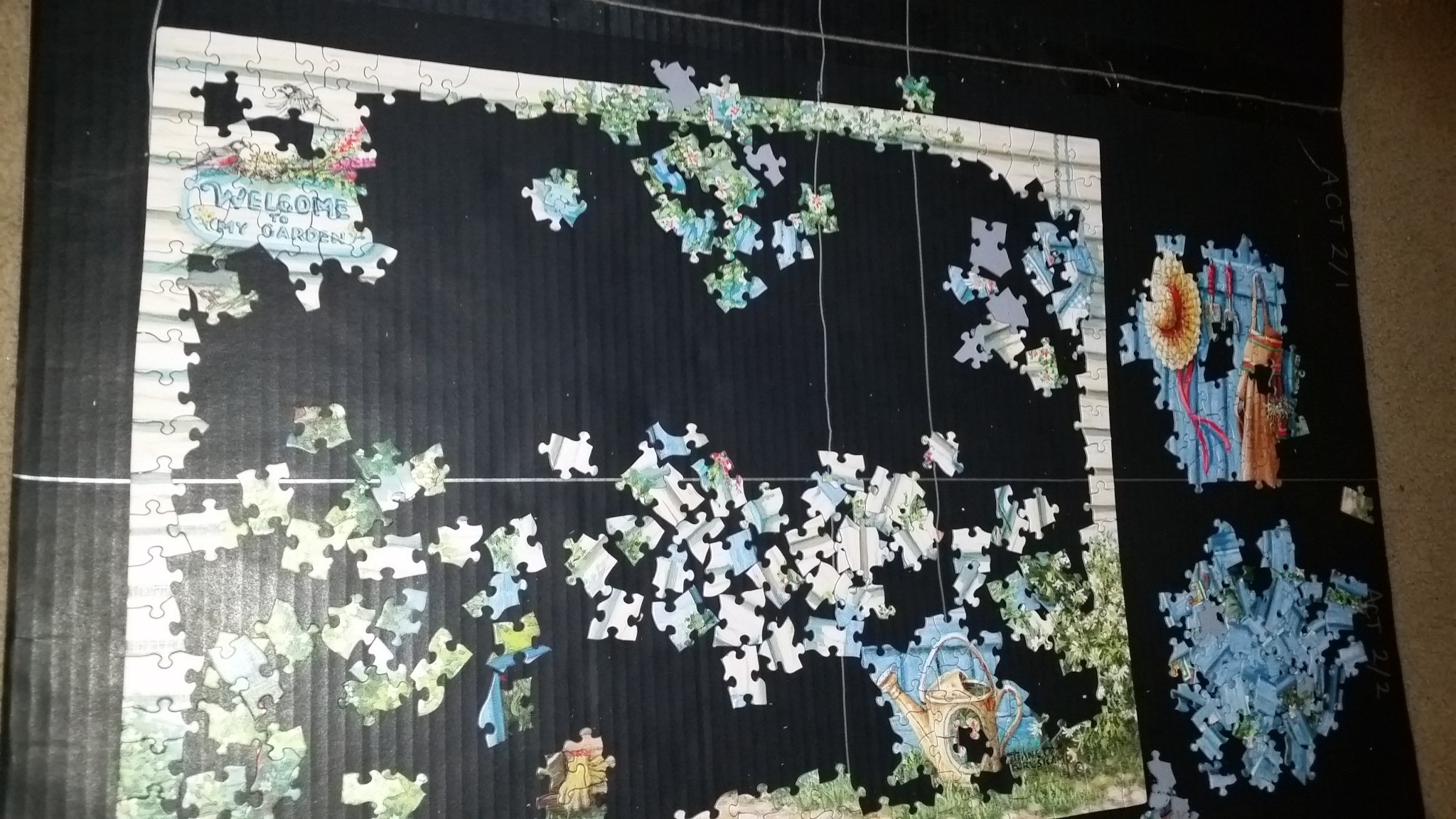
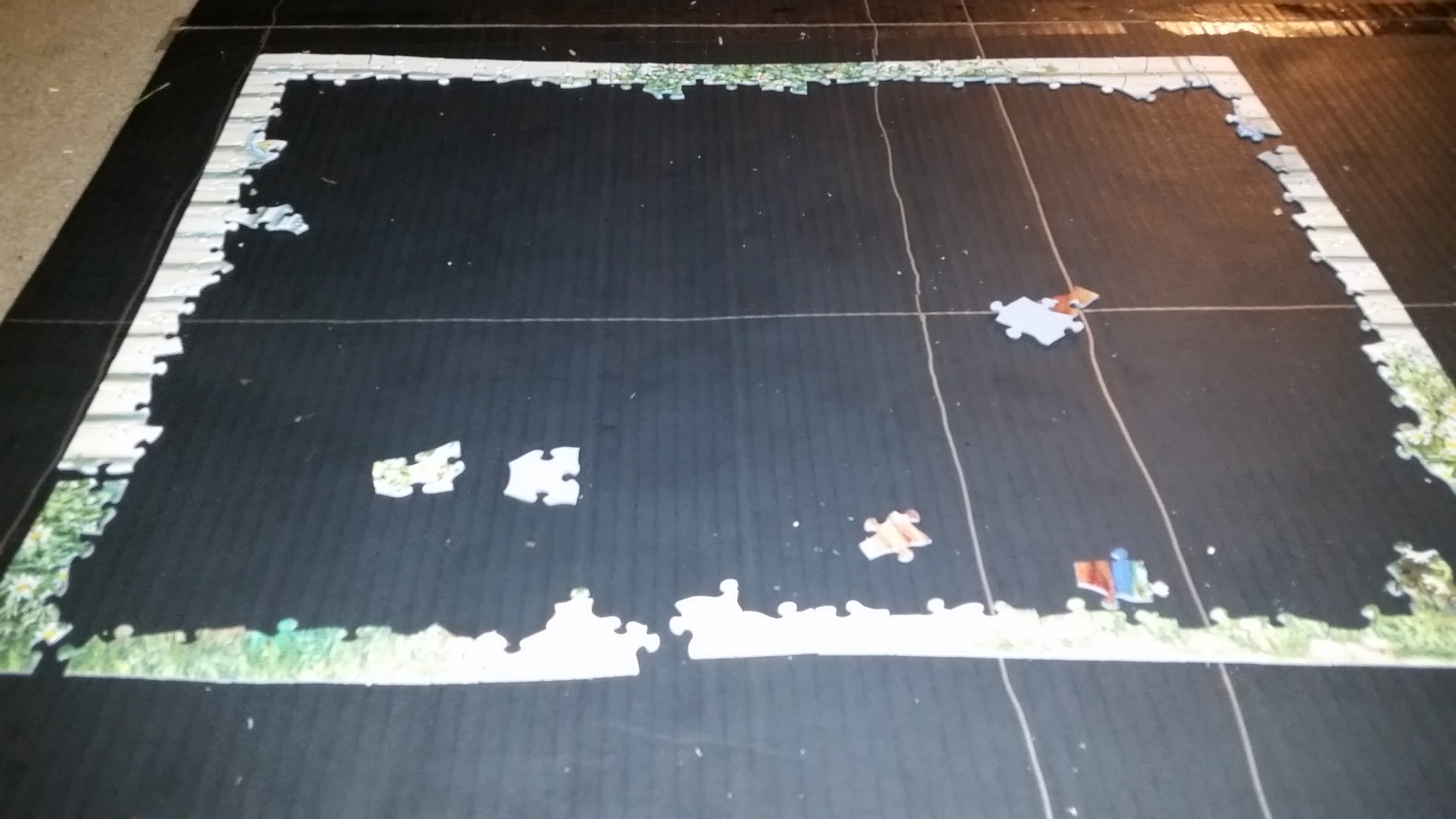
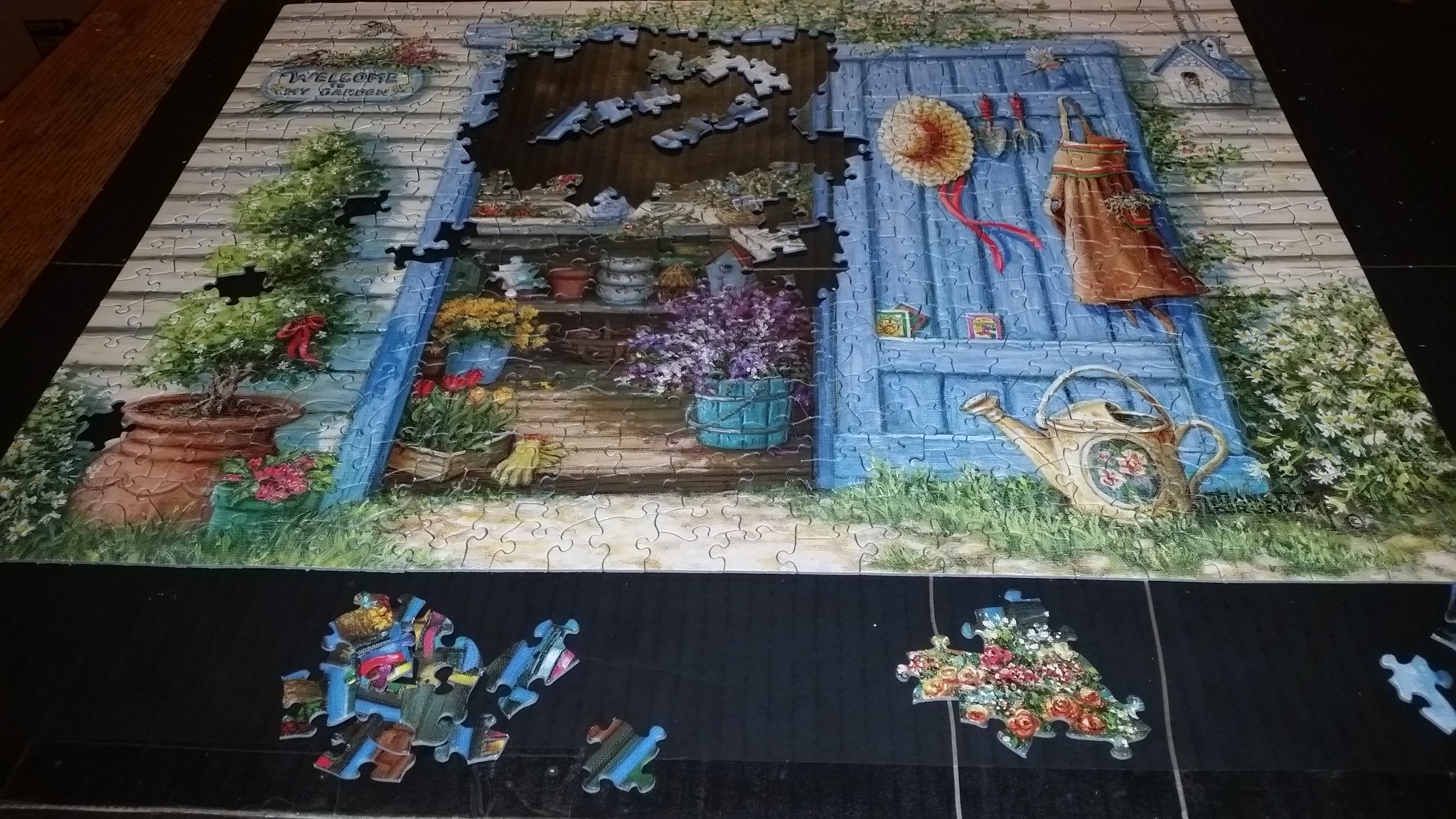
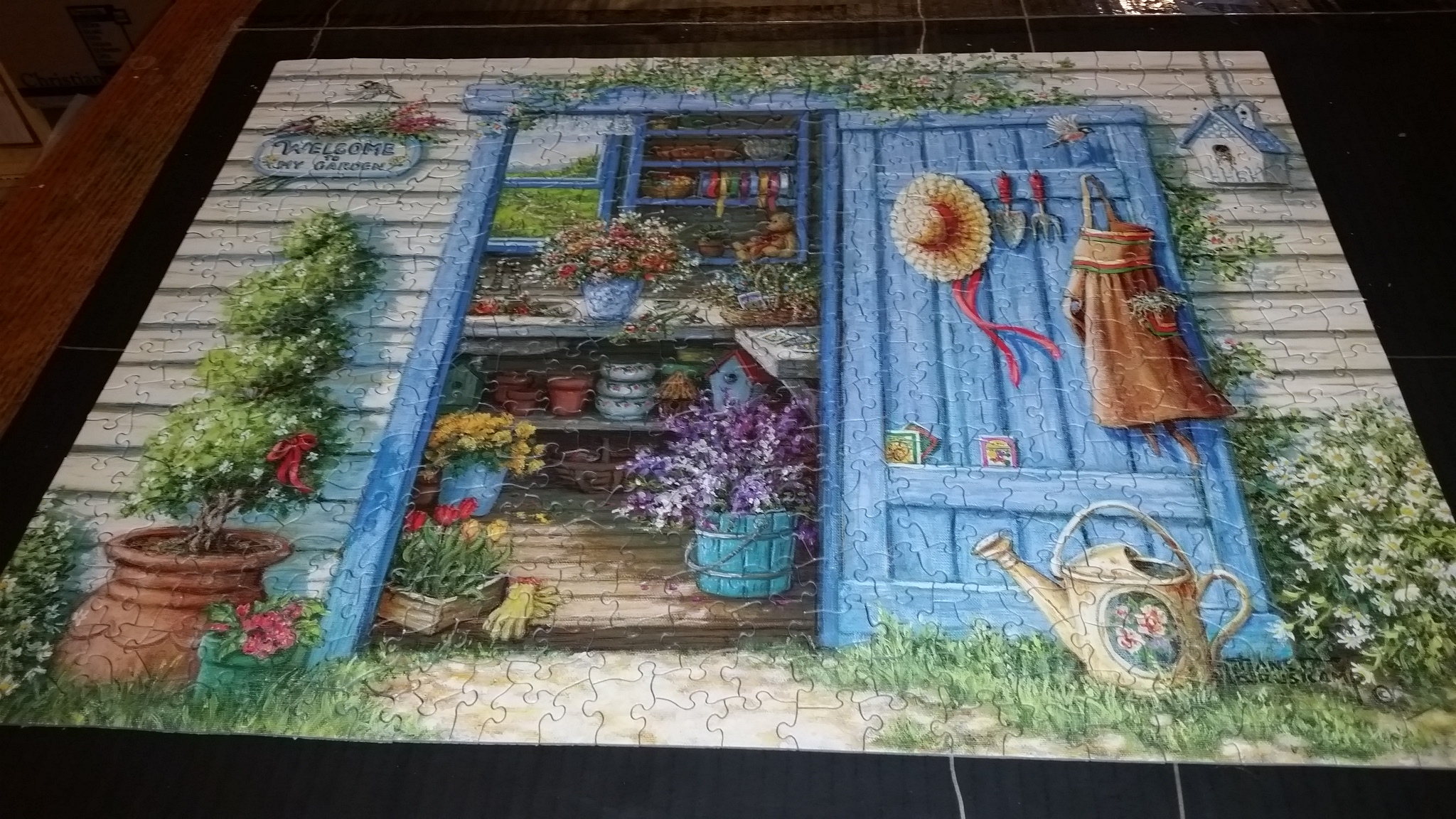
The problem is that authors tend to fill in missing pieces without realizing it. Which great insight I pondered a lot over the past two days as I put together a surprisingly challenging puzzle.

The job of a writer is to write your ideas so that your readers see them the same way you do.

Allow me to illustrate.

Your Story Concept:

What you see:

20151107_190247

What they see:

20151105_154212
I put the puzzle together on an old plotboard, hence the “Act 2” part. And my 6-year-old was an enthusiastic helper (for about ten minutes).

You start piecing ideas together. The writing is bad, but you know not to let that stop you. Soon, a shape begins to emerge.

Initial draft

What you see:

20151108_004625

What they see:

20151105_224952

“I think it needs a little more,” they say.

You pour in hours of more thought and revision.

Second through fourth drafts

What you see:

20151108_125128

What they see:

20151108_004625

“I like it!” they say. “I didn’t quite get the middle part, though. I think you need to work on that.”

“Darn, does it show that much?”

(It does.)

You take back your story and get to work again. Eventually you heave a tired, satisfied sigh. It’s pretty much done.

You give it to your faithful readers again.

Final Draft:

What you see:

20151108_131227

What they see:

20151108_125128

“What do you mean it’s not finished?” you exclaim. “What more can I do?

“It’s way smoother. I love the details you added!” they assure you.

“But all those details were already in there!”

If they’re good friends, they insist that part of it still isn’t working, so you take it back and look more closely. Oh, now you see where you didn’t really spell out the setting or a character’s reaction. OH! There’s a BIG hole there! How did you not see that?

More hours. More thought. More writing. And eventually you give it back. You admit that this is what it is:

The Story:

20151108_130753

But no story is perfect. You’ve done such a beautiful job on the rest of it that your readers are willing to see it as:

20151108_131227

And you think, “Hey, that was totally worth it!”

Because writers are inspired, passionate, and slightly insane.

Ruthless Courtship

Ruth-and-Boaz
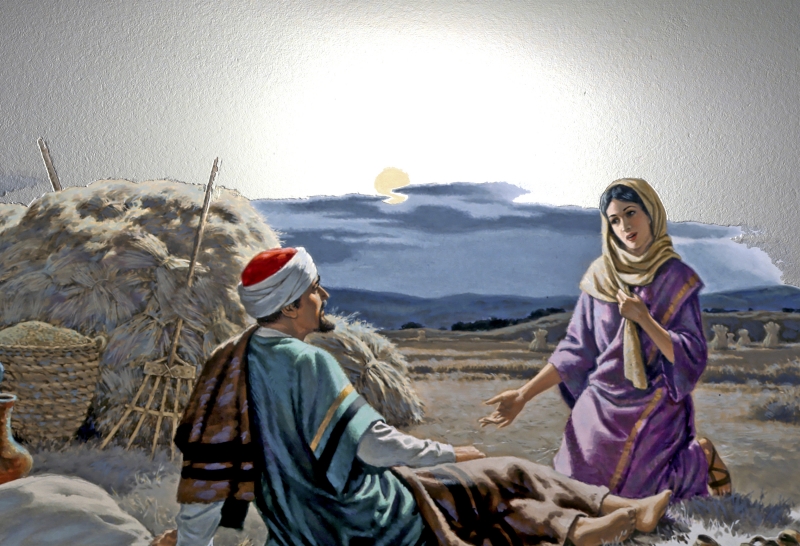
Properly dressed and keeping a chaste distance between them, Ruth suggests that Boaz might want to marry her.
Romeo_and_juliet_01
They’re kissing. And they’re not even courting, much less engaged.

During my teenage years in a Fellowship-like system, I was given an assignment on “courtship.” No, I didn’t get to court anybody, although I was desperately interested in the idea. My assignment was to research a romantic couple in literature and explain how they did or didn’t follow the Biblical principles of courtship. Then, as a contrast, I was to highlight a Biblical couple who did follow the principles of authority-led courtship.

As a quick recap, the brand of courtship that my camp espoused went something like this, (not necessarily in these exact words):

  1. Approach — A single man (and his parents) chose a woman worthy to pursue, and the suitor asked her father for permission to court her.
  2. Evaluation — The father decided if this young man was right for his daughter.
  3. Approval — After an unspecified process and duration of evaluation, the father ideally would approve the young man as a suitor.
  4. Acceptance or Veto — The father then went to his daughter and told her who wanted to court her. This was the woman’s one moment of self-agency. She could accept or decline.
  5. Courtship  — If she accepted, she and the young man were unofficially bound in courtship. It wasn’t an engagement, but to break off a courtship was a very serious matter.
  6. Purity — To protect both parties, parents (usually, but not always, hers) set strict rules about conversations, physical interactions, how much time they could spend together, and whether they could ever be alone.
  7. Engagement — He asked her to marry him after his authorities agreed it was time. She could theoretically decline the engagement, but that would be highly scandalous.
  8. Marriage — Whew, finally get them safely married. Now they could have sex and God wouldn’t get mad.

With this courtship formula in mind, I chose Romeo and Juliet as my cautionary couple, and Ruth and Boaz as my shining example.

Whatever I thought I learned at the time, some lessons now stand out very clearly all these years later:

      1. If Romeo and Juliet had followed the principles of authority-guided romance, there would be no story. In fact, anytime characters always behave according to the rules — good or bad — the story is lifeless. Most morality tales are zombies, dead stories forced into terrible half-lives.
      2. Since courtship was “Biblical,” and since Ruth and Boaz are clearly a “good” couple in the Bible, it follows that their relationship is Biblical. I experienced a major disconnect when I tried to fit them into the formula. I mean, Ruth followed her mother-in-law Naomi’s advice to speak to Boaz about marriage; and her mother-in-law was her authority, so I guess Ruth was under authority. But Ruth basically threw herself at Boaz. At night. Where he was sleeping. It’s unclear exactly what went on between them on that threshing floor, but it’s pretty hot stuff compared to the painfully chaste courtship stories we were given to emulate.
      3. There was no male leadership. Boaz didn’t make the first move. The only “permission” he asked was when he had to let a nearer relative get the first chance to marry Ruth.
      4. If Ruth and Boaz had followed the “right” method of courtship, they wouldn’t have gotten married either.

Basically, this whole assignment shot itself in the foot. While Romeo and Juliet failed to follow the proper steps of courtship and DIED, I learned that the Bible didn’t, in fact, lay out a correct method of romance. This lesson opened the way for me to interpret courtship so liberally that when the time came that I actually did court a man, I exercised all kinds of self-agency in my decision-making. I entered marriage fairly well-prepared for life as an equal partner to my husband.

So while I wasn’t as bad as Juliet, I still completely failed at courtship. I’m pretty sure Ruth was proud of me.

Why, yes, I’m really pleased with my post title, thanks.

The Courtship Package

hold-my-hand-1492424-1279x1801

In Chapter 5 of The Fellowship, Bekah’s good friend Ty gives her a ride home to her parents’ for the weekend. He’s begun to suspect that the “weird church” Bekah grew up in affects her thinking more than he realized. Bekah fields his questions about authority, college, a woman’s role in life, and they eventually get around to “courtship.”

“Courting…?” Ty said.

Bekah groaned.

He went on, “That basically means getting engaged, right?”

“No. We’ve had this conversation before too.” 

“I know. I just can’t keep straight… oh, hang on. It means you can’t hold hands till you get married.”

“Exactly. Glad you listened when I explained it.”

“No, no, wait, I remember more now. It means you can’t hold hands until you marry the guy your dad says you can marry.”

“You’re definitely not going to be speaking at any Youth Meetings.”

“How would you explain courtship then?”

“It means not starting a romantic relationship until you’re ready for marriage. And you have to have the blessing of both fathers. And the guy initiates the relationship, not the girl.” Bekah didn’t add the dozens of other rules and expectations that were included in the courtship package.

*

My husband and I courted. We waited until we were ready for marriage before we started a romance (we were already friends). He contacted my mother first (both my dad and stepdad were dead, a situation that the patriarchy movement tends to gloss over). We involved our parents and families in our activities. We set boundaries in our relationship, including saving our first kiss for the wedding. (Full disclosure: we didn’t save everything for the wedding; we felt very free to make out within our boundaries.) For years I was a big fan of courtship… until I figured out why ours went so well. We did it wrong.

DJ and I made all the decisions ourselves. Our parents were available for consultation — I talked for hours with my mom before agreeing to court him — but they didn’t have any final say. It never occurred to them to try to make our decisions for us. We took charge of our relationship, and it’s served us well all these years later.

But we have many friends whose parents very much considered themselves the active authority in the relationship. Those courtships rarely went well. Either the couple was too compliant and didn’t learn how to function as a united force, or one or both parties aggressively asserted independence and everybody suffered from the emotional fallout. As one friend said later, “My courtship was the most miserable time of my life.”

All too often, “courtship” ends up looking a lot like these rather poetic essays from two friends:

Davad:

When I was 14, the homeschool fathers said, “Read your Bible, abstain from sex, and in a few years you’ll be ready for one of our daughters.” And I did.

When I was 18, the fathers said, “Work hard, be creative, and make something of your life, and in a few years you’ll be ready for marriage.” And I did.

When I was 22, the fathers said, “Embrace our theology for yourself, get a career that pays as much as we make now, and you’ll be ready to court.” And I did.

When I was 26, they said, “Why are you so independent from your parents, go to a different church in a different state, and don’t respect their authority? The answer is no.”

Rachel:
When I was 14 I was told, “Promise God you will never date, try with all your energy to turn your crushes into something else, learn how to be content with only your parents and your brother as friends, and one day you’ll catch the attention of a godly man.”

I did.

At 18 I was told, “Focus on ministry, minimize your own dreams and desires, give selflessly at home, learn to submit to your parents at home, and soon a godly man will notice you.”

I did.

At 22 I was told, “The godly man you think is the one isn’t the one, trust us. So submit to your parents’ better judgement and discipline your heart to be quiet while they make it impossible for this man to know you well enough to consider you. Focus on serving. Focus on giving. And soon the right godly man will notice you.”

I did.

At 29 I was told, “The godly man who has seen you, noticed you, and admired you while you’ve been giving and serving and ministering, isn’t committed to courtship, and you promised us when you were 14 that you wouldn’t date. So this is not the right godly man. Just…”

I stopped listening.

I’m married to him.

But the years I wasted are never far from my consciousness.

*

The problem isn’t that parents are involved, or express disapproval, or set high standards. The problem is, as expressed a little later in the novel:

“I don’t resist the idea of authority,” Ty objected. “What I resist is somebody telling me that he speaks for God in my life, and if I don’t listen to him I’m screwed.” 

Looking back, here’s what I see:

  • Some people did everything right and have a beautiful marriage now.
  • Some people did everything right and are picking up the pieces of shattered dreams.
  • Some did everything as stupidly as possible, and suffered from years of misery.
  • Others did the same thing and ended up wiser, a bit storm-tossed, and happily married.

The Courtship Package was sold to us as a way to prevent bad things from happening. But the promise was empty. Formulas don’t guarantee success. Even God doesn’t guarantee that everything will go well. Trusting in a formula leaves us shattered and helpless when things go wrong. Trusting in God gives someone to grab onto when everything is falling apart.

So I’m not really a fan of “courtship” anymore. I’m a fan of two people knowing their own minds and getting to know one another, and standing together before God and the world.

*

Click here to order (print) or pre-order (Kindle) The Fellowship.

First Things First

You emerge from the closed-in world of Christian patriarchy with a broken worldview and a long list of issues you need to figure out. Where on earth do you start?

Well, speaking as one who has spent the past fifteen years walking the recovery journey with many others, I’ve got a suggestion. Before you revisit anything else…

…Courtship vs Dating

…Friendships

…Modesty

…The Bible

…Godly Womanhood/Manhood

…Sex

or even Authority…

Before all that, immerse yourself in Grace.

If you’re like I was, you have no concept of what “grace” really means. As I was taught it, grace was merely another way to obey more, work harder, do more.

Good news: I was wrong.

You can find some good definitions of grace. The most common one is God’s unmerited favor toward humans. That always sounded too much like churchspeak to resonate with me.

Near the end of my novel, I explain grace as God’s approval that we don’t deserve. We don’t have to be good enough.

I like that okay, although I gave a definition mostly for the story’s sake.

My favorite explanation of grace came from my exploration into the Eastern Orthodox Church several years ago. Eastern Orthodoxy tends to be much more mystical than we Westerners are used to. It also doesn’t get hung up on precise definitions.

So what is grace? It’s God giving us part of Himself. Not “power” or “favor” or whatever. He gives us Him. We don’t have to do enough or be enough. He’s already there, filling up where we fall short, keeping us afloat when we’re too tired to try any more.

So while you’re struggling and crying and begging for answers… Start with grace. Let God — the real God, not the angry god of legalism — sink into your soul. After a while, you can move on from there. Go slow. God’s got all the time in the world.

The Ministry of Shania Twain

shania_twain_up

Up until I was 14, I listened to secular pop music. But I spent my teen years under a Venerated Teacher who assured me that ungodly music would give Satan ground in my soul. He even used a diagram that showed my soul as a grid. Every time I listened to a “rock song,” I surrendered a square of that grid to Satan. (Apparently Satan advanced his kingdom by square inches, who knew?)

We all learned to draw this diagram, including little black fortresses on the “ground” we’d surrendered. The only way to reclaim it was to pray, specifically, that God would take back that ground. Oh, and to stop listening to rock music.

So for almost ten years, I carefully avoided anything with a certain beat, a certain sound, or from certain eras. I wasn’t sure how much square footage my soul contained, after all.

I got married at 23, and that was about the time I started realizing that my Venerated Teacher taught more nonsense than wisdom. Within a couple of years, I dared to venture back into the world of ungodly music.

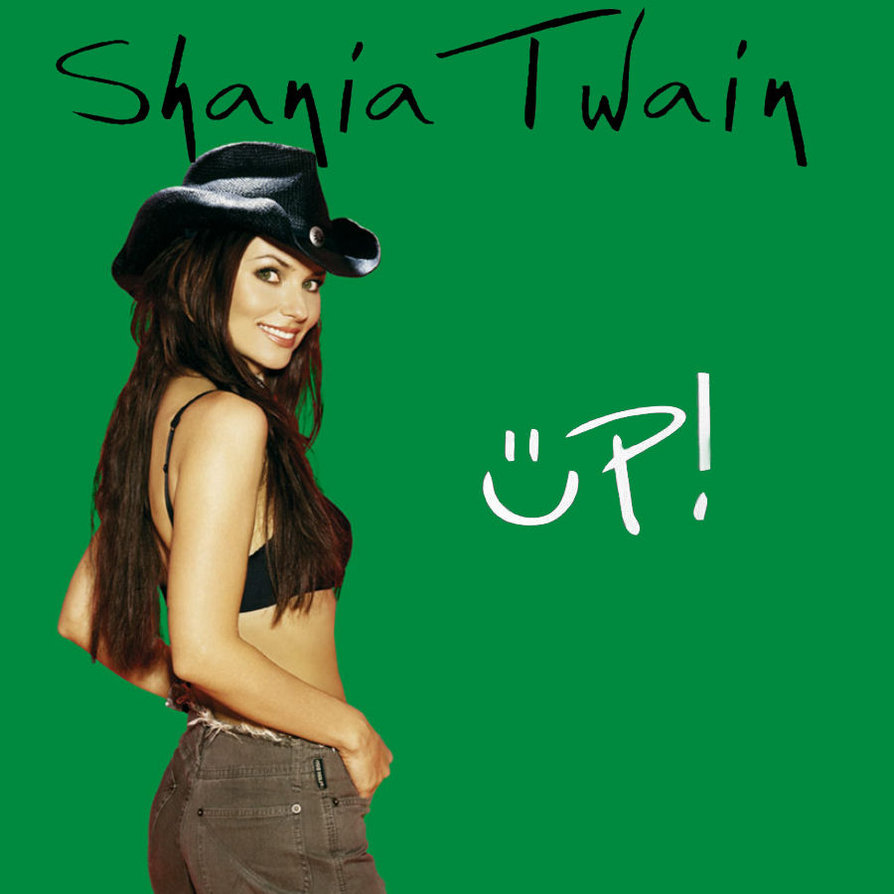
Throwing concern for my soul to the wind, I bought three CDs: Sara Evans’ Born to Fly, Jo Dee Messina’s Greatest Hits, and Shania Twain’s Up.

The interesting thing about these choices is that they all have a major kick of girl power. And of all of them, Shania kicked the hardest.

Recently, I pulled out that music again. It took me back to those early years when I still lived on the fringes of a culture of womanly submission and sexual repression.

I remember now that it gave me a zing to listen to a song that said, “You’re a fine piece of real estate, and I’m gonna get me some land.” And coming from a world where a broken courtship was deeply embarrassing and morally questionable, it was therapeutic to hear a woman say, “It was never gonna work/You were too much of a jerk… I miss you now and then but would I do it all again? Nah.”

I needed that sass and confidence. I needed permission to disagree with accepted opinions… or just say, “Nah.”

All these years later, I’ll still listen to the Messina album. Evans’ “Born to Fly” is still one of my favorite songs. (Obviously I was channeling Bekah Richards years before I put her into words.) As for Up, I wouldn’t say that the music has aged extremely well. In fact, most of the songs are downright cheesy. But they’re also fun, flippant, and assertive. For better or for worse, they played a big part in my recovery.

I still had a long walk ahead of me as I remembered who I was, not who I was supposed to be. But I have to confess… Shania gave me a running start.

*****

Order your copy of The Fellowship!

The Inner Dialogue of an Indie Author

Me: There are errors in the novel.

InnerMe: Errors? Like what? You accidentally killed off somebody in Chapter 16? “Everything came to a screeching halt when, the next morning, Bekah woke up dead…”

Me: Aren’t you funny. No, the story’s solid. I mean formatting errors. And some typos.

InnerMe: You knew that would happen.

Me: But that doesn’t mean I wanted it to.

InnerMe: And you’re going to get them corrected.

Me: But there will still be copies floating around with errors!

InnerMe: But your whole story is about how you don’t have to be perfect!

Me: Well, yeah, but I’m not selling these copies to God. People are notoriously lax when it comes to extending grace toward novels.

InnerMe: Ahem. Like… you?

Me: What?

InnerMe: Let’s discuss the books you’ve verbally shredded over the years because they didn’t meet your exalted standards…

Me: Let’s don’t.

InnerMe: Twiiiiliiiight….

Me: Shut up! I said my story is solid! Twilight has some serious plot problems, like…

InnerMe: Forget I mentioned it. Please. All I’m saying is that you might be dreading a taste of your own medicine.

Me: That’s a cliche.

InnerMe: If the shoe fits…

Me: I can’t believe my inner voice speaks in cliches!

InnerMe: Seriously, are you just going to sit around stewing about some errors that you’re going to fix but can’t right at this moment?

Me: Well… I could stew about the fact that the house is a wreck too.

InnerMe: The house is always messy.

Me: I know, and I’m fine with that in general. But it’s reached a unacceptable level of messy.

InnerMe: We can fix that! Right now!

Me: Yes! You are totally right! CONQUER THE MESS!

InnerMe: And… sorry about the cliches.

Me: It’s okay. It’s the thought that counts. Oh my gosh, did I just…

InnerMe: Grab a scrubby. We really need to get to work.

Revealing (the) Outfit

My title made me laugh.

The pictures I posted in my previous post are — as many of you knew or guessed — a “modest” swimsuit. I suppose it would also work for an acrobat, Krisa. Tara, I would be delighted to get one for you for a hot anniversary celebration, if you want.

It’s very lightweight, and there are leg-loops and a bottom snap to keep the skirt from flying up. In more subdued colors, it might not even be such an assault on the eye. True, that is a knee-length skirt going on there, which just isn’t safe; but the swimsuit is pretty well-designed for its purpose.

It’s the purpose that I object to. I’m just fine with the fact that women have certain features that particularly appeal to men’s sexual appetites, and it’s a mark of respect to herself to cover them up for the general public. What I don’t like is the idea that a woman must obliterate the shape of her own body, or else she tempts men to lust and therefore sins.

But that’s everyday life for Bekah and her friends in the Fellowship. Their swimwear covers their bodies from neck to knees… but they still swim in a separate area from where the boys swim. You can’t be too careful.

Inspiring lust isn’t something that Bekah herself worries about much; she doesn’t see herself as especially beautiful. But her friend Meghan has all the right curves no matter how modestly she dresses. And as the story unfolds… that proves to be a real problem.

All of you who commented are entered into a drawing for the novel once it’s launched — congratulations!